Masonry construction is known for its strength, durability, and ability to support heavy loads over long periods of time. Builders commonly use materials such as brick, stone, and concrete masonry units (CMU) in commercial construction because these materials provide strong structural stability, fire resistance, and long-term reliability.
However, even the strongest masonry structures sometimes require temporary support during construction, repairs, or renovations. When contractors remove or modify part of a masonry wall, the building’s load distribution can change. If the structure loses support during this process, walls can crack, shift, or collapse.
To prevent this from happening, contractors use shoring systems. Shoring provides temporary structural support that stabilizes walls and other building components while construction work is underway.
In commercial masonry construction, shoring plays a critical role in maintaining safety, protecting workers, and preserving the structural integrity of buildings during complex projects.
This guide explains what shoring means in masonry construction, why contractors use it, the different types of shoring systems, and how professionals implement them safely in commercial projects.
What Is Shoring in Masonry Construction?
Shoring refers to temporary structural supports used to stabilize walls, floors, or other structural components during construction, repair, or demolition.
Contractors often use shoring when structural work could weaken or destabilize a masonry wall. For example, if a contractor needs to create a new doorway in a load-bearing wall, the wall can no longer carry the load during the modification. A properly installed shoring system supports the structure while workers complete the work.
Once contractors install a permanent structural solution, such as a steel beam or reinforced masonry support, they remove the temporary shoring system.
Simple Definition of Shoring
In simple terms, shoring is a temporary support system that prevents a structure from shifting or collapsing while construction work takes place.
Engineers and contractors design shoring systems to carry the loads that the original structure normally supports.
Why Shoring Is Necessary in Masonry Work
Masonry walls often carry large structural loads from floors, roofs, and upper levels of a building. When workers remove even a small portion of a wall, they can disrupt the load path that keeps the building stable.
If the structure loses proper support during this process, several problems may occur:
- Walls may crack or shift
- Structural components may settle unevenly
- Adjacent structures may experience damage
- The structure could collapse unexpectedly
Shoring allows contractors to safely redistribute these loads to temporary supports while construction work continues.
Temporary vs Permanent Structural Support
A key feature of shoring is that it serves as temporary support.
Permanent structural elements, such as beams, columns, and reinforced masonry walls, support the building throughout its lifespan. Shoring systems support the structure only during construction or repair work.
After workers install permanent structural supports and the building can safely carry its loads again, they remove the shoring system.
Why Shoring Is Important in Commercial Masonry Projects
Commercial buildings often involve complex structural systems and heavy loads. Because of this complexity, contractors frequently rely on shoring during masonry projects.
Preventing Structural Collapse
The primary purpose of shoring is to maintain structural stability. When contractors modify or repair masonry walls, the wall’s ability to carry loads may temporarily decrease. Shoring supports the structure until workers complete the permanent structural work.
Ensuring Worker Safety
Construction sites present many safety risks. Unstable walls or structural elements can collapse if they are not properly supported. Shoring systems help reduce these risks and protect workers performing masonry repairs or structural modifications.
Maintaining Structural Alignment
Even small movements in structural components can create long-term issues. If walls shift during construction, cracks or misalignment may develop. Shoring keeps structural elements in place during construction activities.
Protecting Nearby Buildings
Commercial buildings often sit close to one another, especially in urban areas. Structural movement in one building can affect neighboring structures. Shoring helps prevent this by stabilizing the building during construction.
Common Situations Where Shoring Is Used in Masonry Construction
Contractors use shoring in many types of masonry construction and renovation projects.
Masonry Wall Repair or Restoration
Older commercial buildings often require restoration work to repair damaged masonry. Workers may need to remove deteriorated bricks, replace structural sections, or rebuild parts of a wall.
Before removing damaged masonry, contractors install shoring to support the remaining structure.
Foundation Repairs
When foundations require repair, the walls above them may temporarily lose structural support. Shoring stabilizes these walls while contractors perform the foundation work.
Structural Modifications
Commercial buildings often undergo renovations that involve structural changes. Contractors may add doors, windows, or mechanical openings in masonry walls.
Shoring systems allow workers to remove sections of masonry safely while maintaining structural stability.
Demolition of Load-Bearing Walls
Some renovation projects require the removal of existing load-bearing walls. Contractors must install shoring before demolition begins to support the structure above the wall.
Excavation Near Masonry Structures
Excavation work can affect the soil that supports a building’s foundation. If soil movement threatens the stability of a masonry structure, contractors may install shoring to support nearby walls.
Types of Shoring Used in Masonry Construction
Contractors use several types of shoring systems depending on the structure and the type of work involved.
Raking Shores
Raking shores use angled supports placed against a wall to provide lateral stability.
These supports transfer structural loads from the wall down to the ground through diagonal beams. Contractors often use raking shores when walls show signs of instability or when structural repairs are underway.
Flying Shores
Flying shores consist of horizontal supports installed between two adjacent structures or walls.
Contractors often use this system when they remove or modify the wall between two buildings. The flying shore transfers structural loads between the remaining walls and maintains stability.
Dead Shores
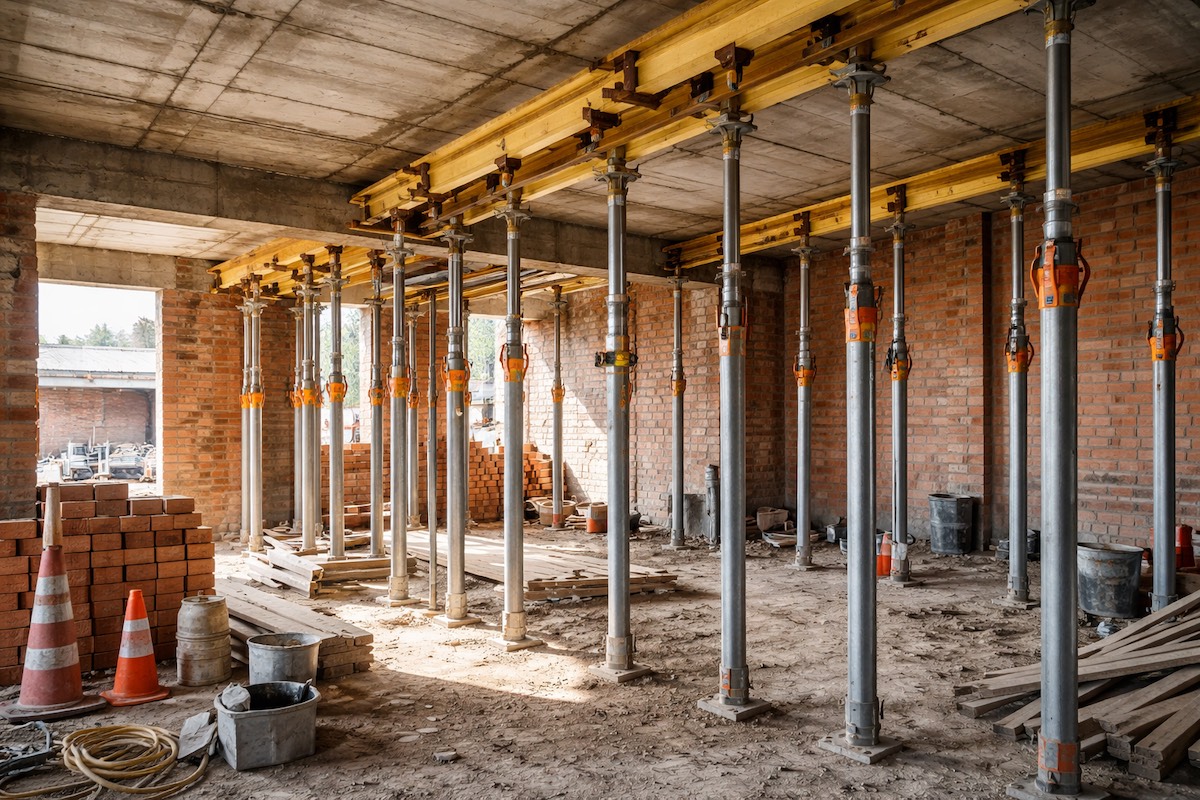
Dead shores use vertical supports placed beneath beams or floors to carry structural loads.
Contractors typically use dead shoring when they remove or replace load-bearing masonry walls during renovations.
Hydraulic Shoring Systems
Modern construction projects frequently use hydraulic shoring systems. These systems allow contractors to adjust supports precisely as construction progresses.
Hydraulic systems use steel frames and adjustable jacks to maintain proper load support during complex projects.
Materials Used for Masonry Shoring
Contractors can build shoring systems using several different materials depending on the size and complexity of the project.
Timber Shoring
Traditional construction projects often used timber for shoring systems. Wooden beams and braces can support small structures or temporary stabilization work.
However, timber shoring is less common in large commercial projects today because it provides lower load capacity compared to steel systems.
Steel Shoring Systems
Steel shoring systems offer greater strength and durability. Contractors can reuse these systems across multiple projects.
Adjustable steel columns and beams allow contractors to create strong and reliable temporary supports quickly.
Hydraulic and Modular Systems
Modern construction projects often rely on hydraulic and modular shoring systems. These systems allow contractors to adjust support levels easily and maintain precise load control.
They are especially useful in large commercial projects where engineering accuracy and safety are essential.
The Shoring Installation Process in Masonry Construction
Installing a shoring system requires careful planning and coordination between engineers and construction professionals.
Structural Assessment
Before installing shoring, engineers evaluate the structure to understand how loads move through the building. This assessment helps identify potential risks and determines how much support the shoring system must provide.
Designing the Shoring System
Engineers design the shoring system based on the building’s load requirements. The design specifies where contractors should place supports and how the system will carry the loads safely.
Installing Temporary Supports
Contractors install the shoring system before they begin removing or modifying masonry elements. Proper installation is critical because removing structural components without support can create immediate instability.
Monitoring During Construction
Throughout the project, engineers and contractors monitor the shoring system to ensure it remains stable and properly aligned.
Removing the Shoring System
Once workers install permanent structural supports and the building can safely carry its loads again, they carefully remove the shoring system.
Safety Considerations for Masonry Shoring
Safety remains the most important factor when contractors design and install shoring systems.
Proper Load Calculations
Structural engineers must calculate loads accurately. Incorrect load calculations can lead to shoring system failure.
Compliance With Building Codes
Contractors must follow local building codes and safety regulations when installing shoring systems. These regulations ensure that the support systems meet required safety standards.
Regular Inspection
Project teams should inspect shoring systems regularly during construction. Inspections help confirm that the system remains stable and properly installed.
Coordination Between Engineers and Contractors
Successful shoring installation requires close communication between engineers, masonry contractors, and construction teams.
Challenges Associated With Shoring in Masonry Projects
Although shoring is essential for safety, contractors may encounter several challenges during installation and use.
Load Miscalculations
If engineers underestimate structural loads, the shoring system may not provide adequate support.
Limited Construction Space
Urban construction projects often have limited space for installing large support systems.
Complex Structural Designs
Older buildings or irregular structures sometimes require custom shoring designs.
Environmental Conditions
Weather conditions, soil movement, and nearby construction activity can affect the performance of shoring systems.
Shoring vs Underpinning vs Scaffolding
Many people confuse these construction terms, but each system serves a different purpose.
Shoring
Shoring provides temporary structural support during construction, repair, or demolition work.
Underpinning
Underpinning strengthens or stabilizes a building’s foundation permanently.
Scaffolding
Scaffolding provides access for workers performing construction tasks. Unlike shoring, scaffolding does not carry structural loads.
FAQs About Shoring in Masonry Construction
What is the main purpose of shoring in masonry construction?
Shoring provides temporary structural support while contractors repair, modify, or remove masonry walls and structural components.
What are the three main types of shoring?
The most common types include raking shores, flying shores, and dead shores.
When is shoring required during masonry work?
Contractors install shoring whenever structural stability could be compromised during repairs, demolition, foundation work, or structural modifications.
Is shoring required for masonry wall demolition?
Yes. If the wall supports other parts of the building, contractors must install shoring before demolition begins.
Who designs a shoring system?
Structural engineers design shoring systems by calculating load requirements and determining the safest support configuration.
Conclusion
Shoring plays a critical role in masonry construction because it allows contractors to maintain structural stability while performing repairs, renovations, and structural modifications. By providing temporary support to walls and structural components, shoring systems help prevent collapse and ensure that construction work proceeds safely.
Without proper planning and engineering expertise, masonry structures can become unstable during construction. This is why professional masonry contractors work closely with structural engineers to ensure that temporary support systems are properly designed and installed.
At Dixon Inc., our team works on commercial masonry projects where structural stability and safety are always top priorities. We understand how to coordinate masonry work with structural engineering requirements, including situations where temporary support systems like shoring are necessary.
From masonry restoration and structural modifications to new commercial construction, our experienced team focuses on delivering durable, high-quality masonry solutions while maintaining the integrity of every structure we work on.
If your commercial property requires expert masonry services, the team at Dixon Inc. is ready to help ensure your project is completed safely, efficiently, and built to last.