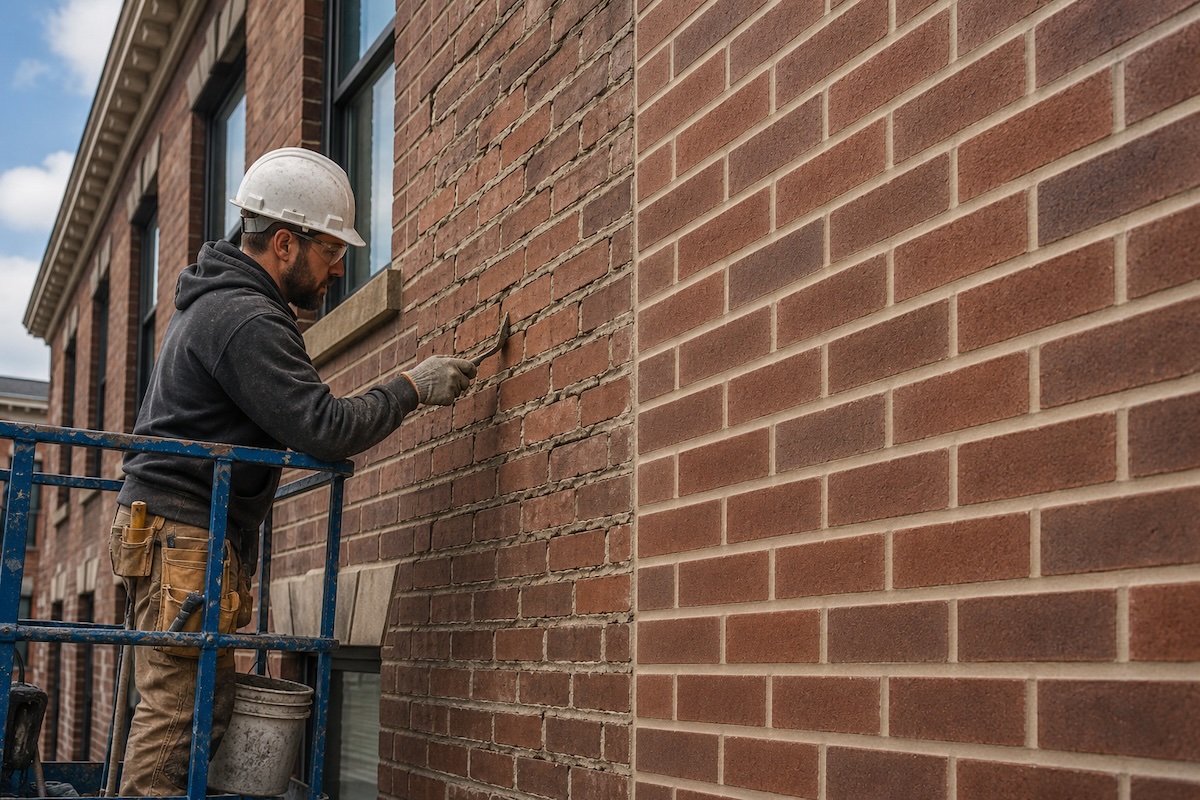
Commercial masonry buildings can last for decades, but they still need regular care. Brick, stone, and block are strong materials. However, the mortar between them often wears down first.
Weather, moisture, freeze-thaw cycles, age, and building movement can weaken mortar joints over time. When that happens, water can enter the wall and create bigger problems.
That is where tuckpointing and repointing help.
People often use these terms interchangeably. They are closely related, but they are not exactly the same. Both focus on mortar joints. Both can protect a masonry wall. Both can improve the look of a commercial facade. The difference comes down to the purpose, technique, and finished appearance.
Understanding tuckpointing vs. repointing can help building owners, facility managers, and contractors make better decisions about masonry maintenance.
Why Mortar Joints Matter in Commercial Masonry
Brick, stone, and block may look like the main structure, but mortar joints play a major role in the wall system.
Mortar helps:
- Hold masonry units together
- Seal gaps between brick, stone, or block
- Manage water movement across the facade
- Support the overall appearance of the wall
- Help protect the building envelope from moisture intrusion
When mortar joints stay strong, the wall performs better and looks cleaner.
When mortar starts to crack, crumble, or pull away, the wall becomes more vulnerable. Water can enter through open joints. Over time, that moisture can lead to spalling brick, staining, leaks, loose masonry, and damage to interior finishes.
For commercial buildings, these issues can affect more than appearance. Poor masonry conditions can impact:
- Tenant spaces
- Building operations
- Safety
- Curb appeal
- Long-term property value
A well-maintained facade tells people the building is cared for. Damaged mortar joints can make even a strong structure look neglected.
What Is Repointing?
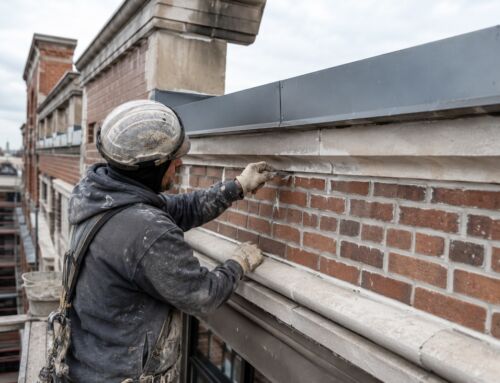
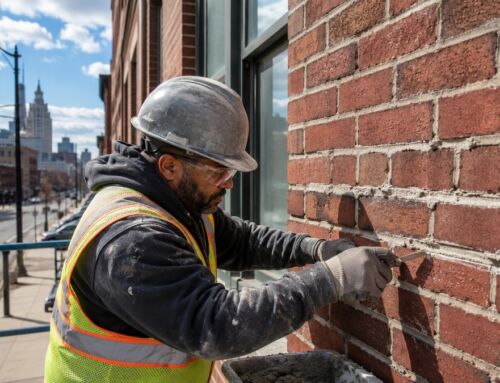
Repointing is the process of removing damaged mortar from masonry joints and replacing it with new mortar.
The main goal is repair. Repointing restores deteriorated joints so the wall can better resist moisture, weather, and continued damage.
A building may need repointing when the mortar becomes:
- Cracked
- Loose
- Recessed
- Soft
- Crumbling
- Missing in sections
These signs often appear before the brick or stone itself starts to fail.
How Repointing Works
A professional repointing process usually includes:
- Inspecting the masonry
- Removing damaged mortar to the proper depth
- Cleaning the joints
- Installing compatible new mortar
- Tooling the joints to match the existing profile
- Allowing the mortar to cure properly
- Cleaning the finished surface carefully
Good repointing should not look like a quick patch. The new mortar should work well with the existing masonry and blend with the surrounding wall.
For many commercial buildings, repointing is the main solution when mortar joints start to fail.
What Is Tuckpointing?
Tuckpointing is a detailed masonry technique that creates a clean, sharp, and refined mortar joint appearance. It can also help protect the wall when deteriorated mortar is properly removed and replaced during the process.
Traditional tuckpointing uses two mortar colors:
- One color closely matches the brick or masonry unit.
- A second, contrasting color creates a thin, precise line.
This makes the joints look narrow, crisp, and uniform.
Many people use the word “tuckpointing” to describe general mortar joint repair. That is why the term often gets mixed up with repointing. However, tuckpointing has a more specific meaning.
Repointing focuses on replacing damaged mortar. Tuckpointing focuses on restoring or creating a refined joint appearance while also supporting the condition of the mortar joints when performed as part of a proper masonry repair process.
Tuckpointing works especially well for:
- Visible commercial facades
- Historic buildings
- Storefronts
- Older brick buildings
- Decorative masonry
- Properties where appearance matters
Tuckpointing vs. Repointing: What Is the Difference?
The simplest difference is this:
Repointing repairs deteriorated mortar joints.
Tuckpointing creates a more refined joint appearance and can also help protect the masonry when failing mortar is properly addressed.
Repointing focuses on performance
Repointing usually makes sense when performance is the top concern. If mortar joints are cracked, missing, or allowing water into the wall, repointing helps restore the wall’s protection.
Tuckpointing focuses on appearance, detail, and joint protection
Tuckpointing usually makes sense when appearance matters, along with repair. It can help restore the original look of historic brickwork or create a cleaner finish on a highly visible commercial facade.
Quick Comparison
| Feature | Repointing | Tuckpointing |
|---|---|---|
| Main purpose | Repair damaged mortar joints | Create a crisp, refined joint appearance while addressing mortar deterioration when needed |
| Primary focus | Function and protection | Appearance, detail, and joint restoration |
| Common use | Commercial masonry repair | Historic or highly visible facades |
| Finish | Matches existing mortar joints | Creates fine, precise joint lines |
| Best for | Weathered or failing mortar | Decorative, historic, or polished facades |
Both services require skill. Both require the right materials. Both can help extend the life of a masonry wall when done correctly.
The right option depends on the condition of the building, the age of the masonry, the level of exposure, and the desired appearance.
Which Service Does Your Commercial Building Need?
Most commercial buildings with deteriorated mortar need repointing first. If the mortar has failed, the priority should be to remove the damaged material and install compatible new mortar.
For example:
- A warehouse with open mortar joints may need repointing to help stop water from entering the wall.
- A school, municipal building, or office property may need targeted repointing around parapets, corners, and window openings.
- A commercial property with leaks near exterior walls may need a full masonry inspection to find the source of the issue.
- A historic storefront may need tuckpointing to preserve or restore the original character of the brickwork.
- A decorative brick facade may need both repointing and detailed finish work.
Some projects need both. A contractor may repoint damaged areas first, then use tuckpointing techniques on visible sections where the final appearance matters most.
A professional inspection can help determine the right approach. Mortar does not always fail evenly across a building. One side may look fine, while another side may show heavy weather damage. High-exposure areas often need attention before protected areas do.
Signs Your Masonry Needs Attention
Commercial masonry usually shows warning signs before major damage appears.
Cracked or crumbling mortar is one of the most common signs. You may also notice joints that look recessed, worn, or uneven. In some areas, the mortar may be missing completely.
Watch for these signs:
- Cracked mortar joints
- Crumbling or powdery mortar
- Missing mortar
- Loose brick or stone
- White staining, also called efflorescence
- Spalling brick faces
- Exterior water stains
- Interior leaks near masonry walls
- Bulging masonry
- Gaps around windows or doors
- Vegetation growing from mortar joints
- Deterioration near rooflines, coping, or parapets
You do not need to wait until the wall looks severely damaged. In fact, the best time to repair mortar joints is before the brick, stone, or block starts to fail.
Replacing damaged mortar is usually easier and more cost-effective than replacing large sections of masonry later.
Why Delaying Mortar Joint Repair Can Cost More
Small mortar cracks can turn into larger building problems if you ignore them.
Once water enters a masonry wall, it can move through the wall system. In cold weather, trapped moisture can freeze and expand. This can break down mortar, damage brick faces, and push masonry units out of place.
Moisture can also affect metal components inside or around the wall, such as anchors, lintels, shelf angles, and flashing-related areas. If those components corrode or fail, the repair may become more complex.
For commercial properties, delayed masonry repair can lead to:
- Tenant complaints
- Interior water damage
- Damaged finishes
- Disrupted operations
- Higher repair costs
- Safety concerns
- Reduced property value
Preventive maintenance helps reduce these risks. Regular inspections and timely repointing or tuckpointing can protect the facade before the damage spreads.
Related Reading – Tuckpointing Cost in Detroit
Why Mortar Compatibility Matters
Mortar is not one-size-fits-all.
The wrong mortar can damage the masonry. This is especially true for older buildings, where the original brick or stone may be softer than modern materials.
If the replacement mortar is too hard or too dense, the masonry units may absorb stress instead of the mortar joint. This can lead to cracking, spalling, or faster deterioration.
A professional masonry contractor looks at several factors before choosing mortar, including:
- Mortar strength
- Mortar color
- Sand texture
- Joint profile
- Moisture movement
- Age of the masonry
- Condition of the existing wall
- Historic or architectural requirements
Color also matters. If the new mortar does not match the existing wall, the repair can stand out. Texture and tooling matter too because they affect both appearance and water shedding.
For historic or architecturally important buildings, proper mortar matching becomes even more important. The goal is to repair the wall while preserving its original character.
Common Commercial Facade Areas That Need Repointing
Some parts of a commercial building face more exposure than others. These areas often show mortar damage first.
Common problem areas include:
- Parapet walls
- Window and door openings
- Corners
- Rooflines
- Stair towers
- Loading dock areas
- Exterior columns
- Brick veneer facades
- Stone bands
- Decorative masonry details
- Areas below gutters or downspouts
- Retaining walls
Parapet walls commonly need attention because they face weather from multiple sides. If coping, flashing, or drainage details fail, parapets can deteriorate quickly.
Window and door openings also need close inspection. Water often collects around sills, lintels, and joints. Failed mortar in these areas can lead to leaks inside the building.
A full facade assessment can show whether the building needs targeted repairs or a larger repointing plan.
How Professional Masonry Contractors Approach the Work
Quality masonry repair starts with a clear inspection. A contractor should look at why the mortar is failing, not just where it is failing.
Weather exposure, age, poor drainage, building movement, and past repair work can all affect mortar joints.
1. Inspection
The contractor reviews the facade, identifies damaged joints, and checks for related moisture or movement issues.
2. Mortar Removal
The contractor removes damaged mortar carefully. This step requires skill. Aggressive grinding or poor technique can chip brick edges, widen joints, or damage historic masonry.
3. Joint Cleaning
The contractor cleans the joints so the new mortar can bond properly.
4. Mortar Matching
The contractor selects and matches the mortar based on the building’s needs. On visible facades, color and texture matching are especially important.
5. Mortar Installation
The contractor packs new mortar into the joints and trowels it to the right profile. Proper tooling improves the appearance of the repair and helps the wall shed water.
6. Final Review
The contractor reviews the finished work to make sure the repair blends well, performs properly, and leaves the facade clean.
On commercial projects, planning also matters. Contractors must consider access, safety, staging, tenants, weather, and project phasing.
Can Tuckpointing or Repointing Be Done Year-Round?
Weather affects masonry work.
Mortar needs the right conditions to cure properly. Extreme cold, high heat, heavy rain, and rapid drying can all affect the quality of the repair.
For commercial projects, contractors may use:
- Temporary protection
- Careful scheduling
- Phased work
- Proper site planning
- Access equipment such as lifts or scaffolding
The best timing depends on the building, the scope of work, and the local weather.
Because commercial facade work may require lifts, scaffolding, or access planning, it is better to schedule inspections before the repair becomes urgent. This gives building owners and facility teams more flexibility.
Tuckpointing and Repointing for Historic Commercial Buildings
Historic masonry needs extra care.
Older buildings may have softer brick, lime-based mortar, unique joint profiles, or decorative details that need preservation. A repair method that works on a newer building may not be right for a historic facade.
Poor repair choices can create long-term problems. For example:
- The wrong mortar can damage old brick or stone.
- Poor color matching can change the look of the building.
- Aggressive removal methods can permanently damage historic masonry.
- Incorrect joint tooling can affect the facade’s character.
For historic commercial properties, tuckpointing can help recreate a crisp, traditional joint appearance. Repointing can restore failing mortar while keeping the original character of the wall.
The goal is to protect the building, improve performance, and respect the original masonry.
DIY vs. Professional Masonry Repair
Commercial masonry repair should not be treated as a basic DIY patch.
The risks are high. The wrong mortar mix can damage the wall. Poor joint preparation can cause the repair to fail early. Uneven tooling can make the facade look inconsistent. Unsafe access methods can create serious hazards, especially in multi-story buildings.
Professional repair helps avoid issues such as:
- Incompatible mortar
- Poor bonding
- Uneven joint profiles
- Visible patchwork
- Brick damage from improper tools
- Missed moisture problems
- Unsafe work conditions
Commercial facades also include building envelope concerns that may not be visible from the ground. A leak may involve failed mortar, but it may also involve flashing, coping, sealants, roof edges, or other moisture protection details.
A professional masonry contractor can evaluate the full wall system and recommend the right repair. That may include repointing, tuckpointing, brick replacement, stone repair, facade restoration, or related thermal and moisture protection work.
How Often Should Commercial Masonry Be Inspected?
Commercial masonry should be inspected regularly, especially on older buildings or properties exposed to heavy weather.
A yearly visual review can help catch early signs of mortar deterioration. Additional inspections may be helpful:
- After major storms
- Before property transactions
- Before renovations
- When leaks appear
- When stains appear
- When mortar starts to crack or crumble
- When parapets or roofline areas show wear
Buildings with parapets, historic masonry, high-visibility facades, or previous water issues may need a more proactive maintenance plan.
The goal is simple: find mortar problems before they become major masonry failures.
FAQs About Tuckpointing vs. Repointing
Is tuckpointing the same as repointing?
No. Repointing removes damaged mortar and replaces it with new mortar. Tuckpointing creates a more detailed and refined mortar joint appearance, often using contrasting mortar colors.
Does every brick building need tuckpointing?
No. Many buildings need repointing rather than true tuckpointing. Tuckpointing is usually best when the finished appearance of the masonry is especially important.
Can repointing stop water from entering a wall?
Repointing can help reduce water entry when failed mortar joints are part of the problem. However, a professional inspection is important because leaks may also involve flashing, coping, sealants, roof edges, or other building envelope components.
How do I know if my commercial building needs repointing?
Look for cracked, missing, recessed, or crumbling mortar. Other warning signs include spalling brick, water stains, efflorescence, loose masonry, and interior leaks near exterior masonry walls.
Can new mortar damage old brick?
Yes. New mortar can damage old brick if it is too hard or incompatible with the existing masonry. Proper mortar matching is especially important for older and historic buildings.
Is tuckpointing only cosmetic?
No. Tuckpointing improves appearance, but it can also help protect the wall when the contractor properly removes and replaces deteriorated mortar during the process.
Should the whole facade be repointed at once?
Not always. Some buildings need full facade repointing. Others only need targeted repairs in damaged or high-exposure areas. A masonry inspection can help determine the right scope.
Conclusion: Protect Your Commercial Masonry With Dixon Inc
Tuckpointing and repointing both help protect commercial masonry, but they serve different purposes.
Repointing restores damaged mortar joints and helps protect the wall from moisture and further deterioration. Tuckpointing creates a cleaner, sharper, and more refined finish while also supporting the condition of the mortar joints when performed as part of a proper masonry repair process.
The right solution depends on your building’s:
- Condition
- Age
- Materials
- Weather exposure
- Appearance goals
- Moisture concerns
- Long-term maintenance needs
At Dixon Inc, we know masonry is more than an exterior surface. It supports your building’s structure, helps protect the building envelope, shapes curb appeal, and helps preserve long-term property value.
Through our Full-Service Masonry, Facade Restoration, and Thermal & Moisture Protection capabilities, we help commercial property owners, contractors, and facility teams address masonry problems with the right repair strategy.
Whether your building needs targeted repointing, detailed tuckpointing, broader facade restoration, or help with water-related masonry concerns, our team can assess the condition of your facade and recommend a practical path forward.
If you see cracked mortar, water stains, loose masonry, or signs of facade wear, contact Dixon Inc to request a detailed estimate. We are here to help protect your commercial building with skilled masonry repair and restoration solutions built for long-term performance.