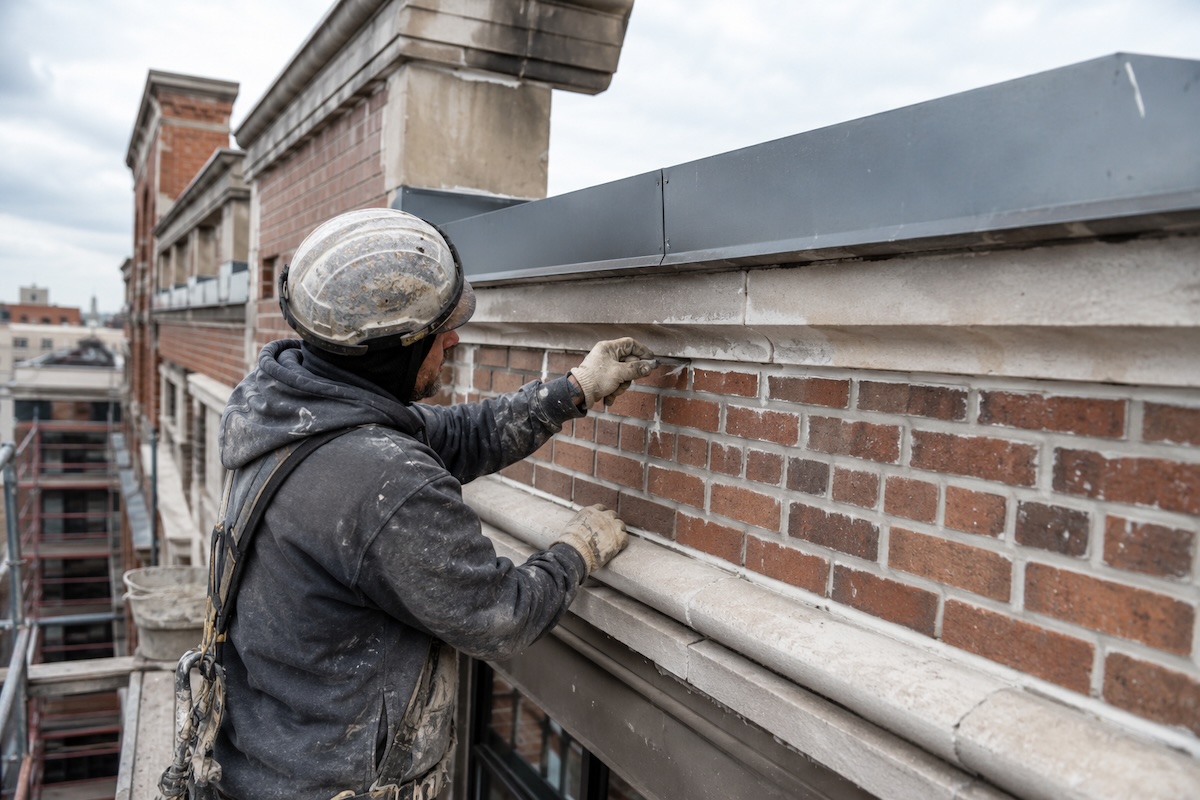
Your building’s facade does more than create a first impression. It protects the structure from rain, snow, wind, pollution, and temperature changes.
Small problems can quickly spread. Cracked masonry may let water enter the wall. Failed sealant can cause interior leaks. Loose brick, stone, or concrete can create a safety hazard.
Regular commercial facade maintenance helps you find these problems early. It also allows you to plan repairs, control costs, and extend the life of your building exterior.
What Is Commercial Facade Maintenance?
Commercial facade maintenance involves inspecting, cleaning, repairing, and protecting a building’s exterior.
A commercial facade may include:
- Brick and concrete masonry
- Natural or manufactured stone
- Precast concrete
- Stucco
- Terra cotta
- Metal panels
- Glass and curtain wall systems
- Exterior insulation and finish systems
- Windows, doors, and storefront systems
- Sealants, flashing, parapets, and coping
Routine maintenance may include cleaning, repointing mortar joints, replacing sealant, repairing cracks, and correcting drainage problems.
Facade restoration usually involves more extensive work. It may include replacing damaged masonry, repairing steel components, rebuilding parapets, or restoring historic materials.
Why Facade Maintenance Matters
Exterior materials may be durable, but they do not last forever. Moisture, temperature changes, pollution, and building movement cause gradual deterioration.
Regular maintenance protects the building in several ways.
Prevents Water Intrusion
Water can enter through:
- Cracked brick, stone, or concrete
- Deteriorated mortar joints
- Failed sealant
- Damaged coping
- Missing or failed flashing
- Blocked drainage openings
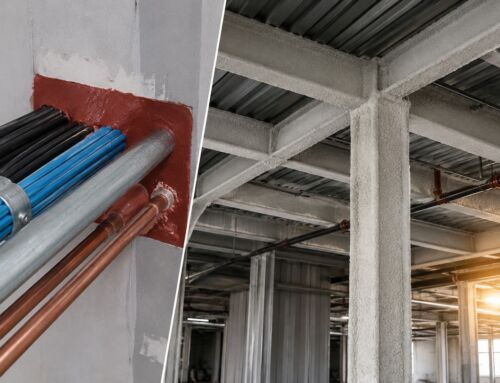
- Gaps around wall penetrations
- Poorly directed downspouts
Once water enters the wall, it can damage insulation, interior finishes, framing, and concealed metal components. It may also cause mold, rust, staining, and freeze-thaw damage.
A contractor should identify the source of the moisture before completing repairs. Filling a visible crack may not stop a leak if water enters somewhere else.
Reduces Safety Risks
Loose masonry, concrete, coping, stone, or facade panels can fall from the building. These materials pose a serious risk near entrances, sidewalks, parking areas, and loading zones.
Warning signs include:
- Bulging masonry
- Loose coping
- Deep or widening cracks
- Displaced bricks or stones
- Pieces of material on the ground
Restrict access to the area if material appears loose or unstable. Arrange a professional inspection as soon as possible.
Extends the Life of Exterior Materials
Facade damage often starts with a small defect.
For example, failed sealant may allow water behind the exterior wall. That moisture can corrode steel or freeze inside masonry. Over time, the surrounding materials may crack or move.
Timely repairs stop this progression. Replacing sealant, repairing mortar, and correcting drainage problems can prevent a minor defect from becoming a larger restoration project.
Supports Energy Efficiency
Gaps around windows, doors, panels, and other wall components can allow outside air into the building. Wet or damaged insulation may also lose effectiveness.
Facade maintenance cannot replace a complete energy assessment. However, repairing appropriate joints and protecting the building envelope can help reduce uncontrolled air and moisture movement.
Protects the Building’s Appearance and Value
Exterior stains and damaged materials can make a well-maintained property look neglected.
Common appearance problems include:
- Rust stains
- Efflorescence
- Biological growth
- Cracked mortar
- Peeling coatings
- Mismatched repairs
- Graffiti
- Pollution buildup
Regular maintenance supports curb appeal, tenant confidence, and long-term property value.
Signs Your Commercial Facade Needs Repair
Watch for changes in the building exterior instead of waiting for an active leak.
Common warning signs include:
- Cracks in brick, stone, stucco, or concrete
- Spalling or flaking surfaces
- Bulging or displaced masonry
- Missing or deeply eroded mortar
- Failed sealant around windows and doors
- Rust stains near lintels or steel components
- Exposed reinforcing steel
- Loose panels, stone, or coping
- Water stains on interior or exterior walls
- Peeling paint or blistered coatings
- White, powdery deposits on masonry
- Recurring leaks after rain
- Drafts or moisture around windows
- Masonry or concrete fragments on the ground
Efflorescence is the white material that sometimes appears on brick or concrete. It may not indicate structural damage, but it shows that moisture is moving through the masonry. You should still identify the moisture source.
Crack patterns also matter. A small surface crack requires a different response than a widening crack, stair-step crack, or crack next to displaced masonry.
What Should a Facade Inspection Cover?
A facade works as a complete system. An inspection should examine the wall surfaces, joints, openings, and drainage components.
Masonry and Exterior Surfaces
Inspect brick, stone, concrete, stucco, and panels for cracks, spalling, movement, loose material, and staining. Bulges or changes in the wall plane may indicate hidden movement.
Mortar Joints
Check mortar for erosion, cracking, gaps, and separation from the masonry.
Replacement mortar must match the existing wall’s physical properties. The National Park Service warns that hard, low-permeability mortar can accelerate the deterioration of softer historic brick.
Sealants and Movement Joints
Check sealant around windows, doors, panels, wall penetrations, and transitions between materials.
Failed sealant may crack, shrink, harden, or separate from the sides of the joint. Installing new sealant over the old material rarely creates a lasting repair. The contractor should remove the failed material and prepare the joint correctly.
Windows, Doors, and Storefronts
Inspect frames, perimeter sealant, glazing, flashing, sills, and drainage openings.
Water near a window does not always mean the window caused the leak. Water can enter higher on the facade and travel through the wall before appearing inside.
Parapets, Coping, and Rooflines
Parapets and coping protect the top of the exterior wall. Cracked caps, open joints, loose masonry, and failed flashing can allow water to enter from above.
These areas often require a lift, scaffolding, drone, or another form of elevated access.
Flashing and Drainage
Check flashing, weep holes, gutters, downspouts, and other components that direct water away from the wall.
Blocked weep holes and damaged flashing can trap water inside the facade. Poorly directed downspouts may also saturate lower walls and foundations.
Essential Commercial Facade Maintenance Tasks
Your inspection findings should determine the scope of work. Common maintenance tasks include the following.
Facade Cleaning
Cleaning removes dirt, pollution, salt deposits, graffiti, biological growth, and stains.
The contractor must choose a method that suits the facade material. Excessive pressure, abrasive blasting, and harsh chemicals can permanently damage brick, stone, concrete, and historic surfaces.
Test the cleaning method on a small area before treating the full facade.
Mortar Repair and Repointing
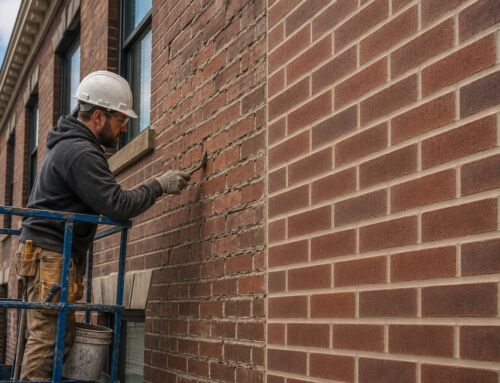
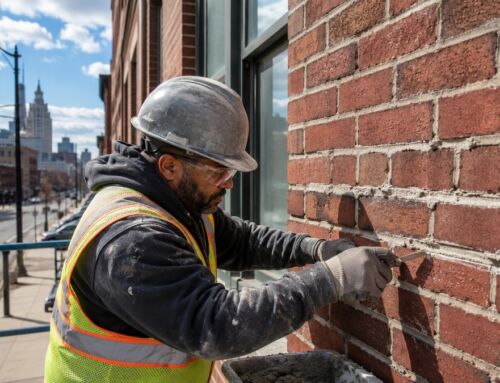
Repointing involves removing deteriorated mortar and installing new mortar in the joints.
The new mortar should match the existing masonry in strength, permeability, composition, color, and appearance. Mortar that is too hard can damage softer brick as the wall expands, contracts, and releases moisture.
Dixon’s full-service masonry team can evaluate damaged joints and recommend a compatible repair approach.
Brick and Stone Repair
Damaged masonry may require patching, resetting, or replacement.
Before completing the repair, identify the cause. Common causes include:
- Water intrusion
- Corroded steel
- Building movement
- Failed flashing
- Poor drainage
- Incompatible previous repairs
Replacement units should match the existing masonry in size, texture, color, and performance.
Concrete Repair
Water and deicing salts can reach reinforcing steel inside concrete. As the steel corrodes, it expands and pushes against the surrounding concrete. This pressure can cause cracks and spalling.
A proper repair may require removing unsound concrete, treating the exposed steel, and installing a compatible repair material. The contractor should also address the moisture source.
Sealant Replacement
Sealants protect joints where materials meet or where the facade must accommodate movement.
Proper replacement may require:
- Removing the failed sealant
- Cleaning and preparing the joint
- Installing backer rod or primer when required
- Applying a suitable new sealant
- Tooling the joint to create full contact
The selected sealant must suit the joint’s size, movement, exposure, and surrounding materials.
Parapet and Coping Repair
Open joints, cracked coping, failed flashing, and deteriorated masonry can allow water to enter at the top of the wall.
Repairs may include repointing, replacing sealant, correcting flashing, rebuilding damaged masonry, or replacing coping units.
Water-Repellent Treatments
Some masonry facades may benefit from a breathable water-repellent treatment. However, a coating cannot correct cracks, failed joints, or drainage defects.
The wrong coating may trap moisture inside the masonry and make the damage worse. The National Park Service recommends evaluating a repair material’s strength, vapor permeability, thermal movement, and compatibility with the existing surface in its exterior maintenance guidance.
Flashing and Drainage Repairs
A wall needs a clear path for water to escape.
Maintenance may include:
- Clearing blocked weep holes
- Repairing or replacing flashing
- Reconnecting downspouts
- Correcting poorly sloped surfaces
- Improving drainage near the building
- Sealing appropriate wall penetrations
These repairs may not be highly visible, but they often determine how long the facade repairs will last.
How Michigan Weather Damages Commercial Facades
Michigan buildings face rain, snow, ice, road salt, and frequent temperature changes.
Masonry can absorb water. When the temperature drops below freezing, that water expands. Repeated freeze-thaw cycles can cause cracks, scaling, and spalling.
Road salt can also affect lower walls, parking structures, loading areas, and building entrances. Salt-laden moisture may accelerate corrosion and leave deposits on masonry.
Temperature changes cause building materials to expand and contract at different rates. This movement can damage sealants, joints, panels, and connections.
Inspect moisture entry points before winter. Check the facade again after the freeze-thaw season for new cracks, movement, and surface damage.
How Often Should You Inspect a Commercial Facade?
No single schedule works for every building.
The right inspection frequency depends on:
- Building age
- Facade material
- Building height
- Weather exposure
- Previous repairs
- Known leaks or movement
- Public access around the building
- Local inspection requirements
Facility teams should perform routine visual checks and document visible changes. Arrange an additional inspection after severe storms, high winds, impacts, falling material, or recurring leaks.
Older buildings and facades with known problems may need more frequent professional inspections.
Preventive Maintenance vs. Emergency Repair
| Preventive maintenance | Emergency facade repair |
|---|---|
| Allows planned budgeting | Creates unexpected costs |
| Addresses early damage | Responds to advanced deterioration |
| Allows time to compare repair options | May require immediate stabilization |
| Limits disruption | May require closures or restricted access |
| Extends the life of existing materials | Often requires larger repairs |
| Reduces safety risks | May begin after a hazard appears |
Preventive maintenance cannot stop every unexpected problem. It can help you detect damage before it affects a larger area.
How to Create a Facade Maintenance Plan
1. Document the Building
Record the facade materials, construction type, previous repairs, warranties, and known leaks.
2. Establish the Current Condition
Inspect the facade and document defects with photographs and location maps.
3. Prioritize the Problems
Group the findings into:
- Immediate safety concerns
- Active water intrusion
- Problems likely to worsen
- Routine maintenance needs
- Appearance improvements
4. Identify the Cause
Determine whether water, movement, corrosion, poor drainage, or an incompatible previous repair caused the damage.
5. Plan the Work
Separate urgent repairs from work you can schedule over the next several months or years.
6. Use Compatible Materials
Choose materials that suit the existing facade’s strength, permeability, movement, and appearance.
7. Keep Records
Save inspection reports, photographs, product information, warranties, and repair locations. These records help future teams track recurring problems.
8. Reinspect Completed Repairs
Check repaired areas during future maintenance cycles. A repair should continue to perform, not just look good when completed.
When Should You Call a Facade Contractor?
Contact a qualified contractor if you notice:
- Loose or falling material
- Bulging masonry
- Large or growing cracks
- Widespread spalling
- Recurring water intrusion
- Rust stains or exposed steel
- Failed lintels
- Damaged parapets or coping
- Deterioration above pedestrian areas
- Previous repairs that continue to fail
You should also seek professional help when the work requires lifts, scaffolding, pedestrian protection, testing, or coordination between several building systems.
Questions to Ask a Facade Contractor
Ask potential contractors:
- What experience do you have with this facade material?
- How will you identify the cause of the damage?
- Are the proposed materials compatible with the building?
- Will you provide a written scope and repair documentation?
- How will you protect occupants and pedestrians?
- What access equipment will the project require?
- How will weather affect the work?
- What warranty do you provide?
- What maintenance will the facade need afterward?
The proposal should explain what the contractor will repair, why the damage occurred, and how the selected method will address it.
Protect Your Commercial Building with Dixon Inc.
Commercial facade maintenance protects your building from moisture, material deterioration, and avoidable safety risks. Early action can also reduce repair costs and extend the life of the exterior.
At Dixon Inc., we help property owners, facility managers, and project teams assess facade conditions and develop practical repair solutions.
Our facade restoration services include:
- Brick and stone repair
- Tuckpointing
- Mortar matching
- Lintel repair
- Crack repair
- Joint sealant replacement
- Parapet and coping repair
- Restoration cleaning
- Structural steel rehabilitation
We also provide thermal and moisture protection services to help buildings resist moisture and environmental exposure.
If you have noticed cracks, leaks, staining, failed sealant, or loose exterior materials, contact Dixon Inc. to request a detailed estimate.
Frequently Asked Questions
What does commercial facade maintenance include?
It may include inspections, cleaning, repointing, sealant replacement, masonry repair, concrete repair, coping work, waterproofing, and drainage improvements.
Can facade maintenance prevent water leaks?
Yes, if the contractor correctly identifies and repairs the source. The investigation may need to cover the roofline, flashing, windows, joints, and wall drainage.
What causes commercial facades to deteriorate?
Common causes include moisture, freeze-thaw cycles, building movement, corrosion, pollution, poor drainage, aging materials, and incompatible repairs.
What is the difference between facade repair and restoration?
Facade repair addresses specific defects. Facade restoration involves broader work to recover the exterior’s performance, integrity, or historic appearance.
Should you seal every facade crack?
No. First identify the crack’s cause, depth, and movement. Sealing a crack without correcting the underlying problem may only hide the damage.
Does every masonry facade need a water-repellent coating?
No. The need depends on the wall’s construction, condition, and moisture exposure. Repair cracks, failed joints, and drainage defects before considering a coating.