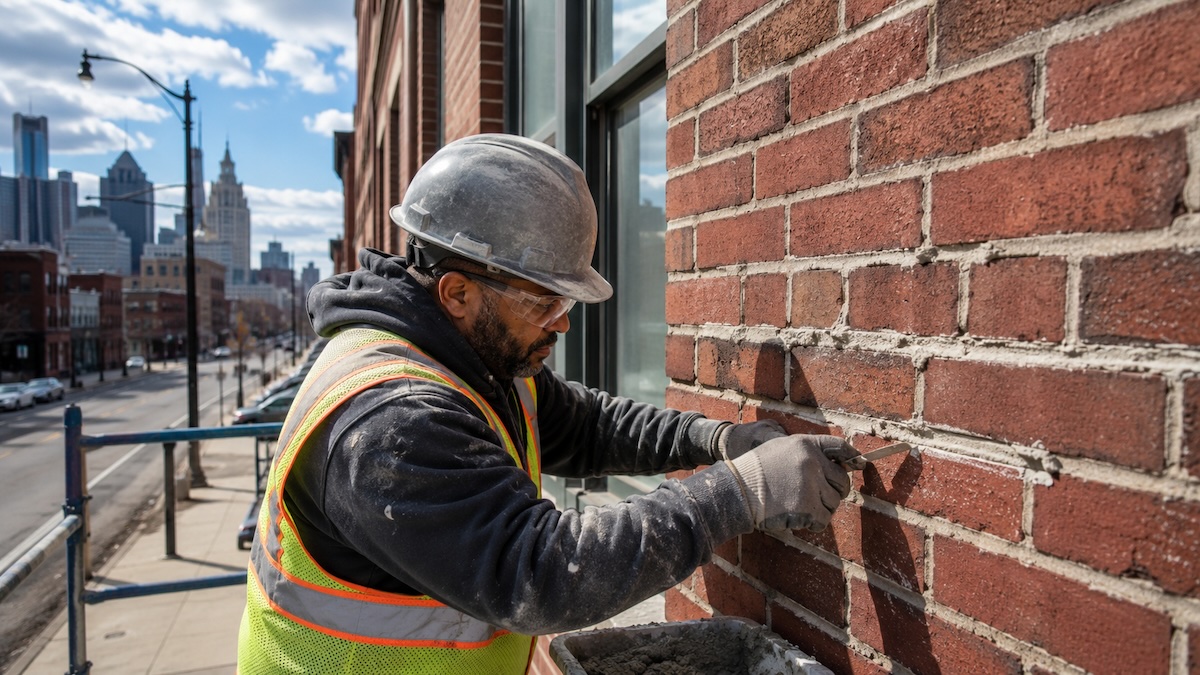
Detroit has thousands of brick homes, commercial buildings, storefronts, chimneys, churches, industrial properties, and historic masonry facades. Brick is strong, attractive, and long-lasting, but the mortar joints between the bricks do not last forever. Over time, Detroit’s cold winters, freeze-thaw cycles, moisture, road salt, wind-driven rain, and aging masonry can cause mortar to crack, crumble, or separate from the brick.
That is where tuckpointing becomes important.
Tuckpointing is one of the most effective ways to restore deteriorated mortar joints, protect a brick wall from water infiltration, and extend the life of a masonry structure. But before scheduling the work, most property owners want to know one thing: how much does tuckpointing cost in Detroit in 2026?
The honest answer is that tuckpointing cost depends on the size of the project, the condition of the mortar, the height of the wall, accessibility, mortar matching, historic restoration needs, and whether the work is residential or commercial. However, based on current national and Detroit-area cost data, most tuckpointing projects fall within a predictable range.
For 2026, tuckpointing commonly costs $5 to $25 per square foot, while more complex masonry restoration, chimney work, historic brick repair, or commercial facade work can cost more. HomeAdvisor lists tuckpointing at about $5 to $25 per square foot, while Detroit-specific cost data from ProMatcher places brick or stone tuckpointing around $7.79 to $11.13 per square foot for standard work. More complex jobs can exceed that range depending on access, repairs, and restoration requirements.
What Is Tuckpointing?
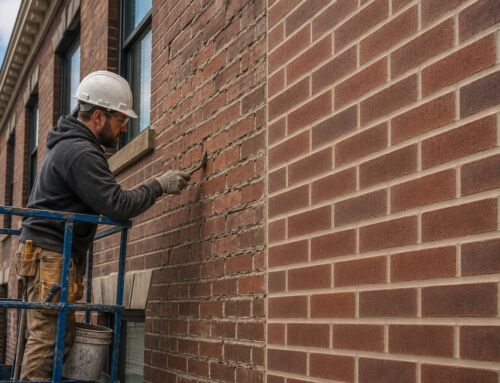
Tuckpointing is a masonry restoration process that repairs damaged mortar joints between bricks, blocks, or stone. Mortar is the material between masonry units that helps hold the wall together and keeps water from entering the structure.
During tuckpointing, a mason removes the damaged mortar to a proper depth, cleans the joints, applies new mortar, and finishes the joints so they blend with the existing brickwork. In traditional tuckpointing, a contrasting thin line may also be added to create a clean, decorative appearance.
In everyday use, many property owners use “tuckpointing” and “repointing” to describe the same type of mortar joint repair. Technically, repointing focuses on removing and replacing deteriorated mortar, while tuckpointing is more decorative and appearance-focused. Angi explains that repointing addresses damaged mortar joints, while tuckpointing improves the look of brickwork with a more finished appearance.
For Detroit homeowners and commercial property owners, the goal is usually the same: restore the mortar joints before water damage, loose bricks, spalling brick, or structural masonry problems get worse.
Average Tuckpointing Cost in Detroit in 2026
For most Detroit masonry projects, the average tuckpointing cost depends on whether the work is simple spot repair, chimney tuckpointing, full wall restoration, or large commercial masonry repair.
Here is a practical pricing guide for 2026:
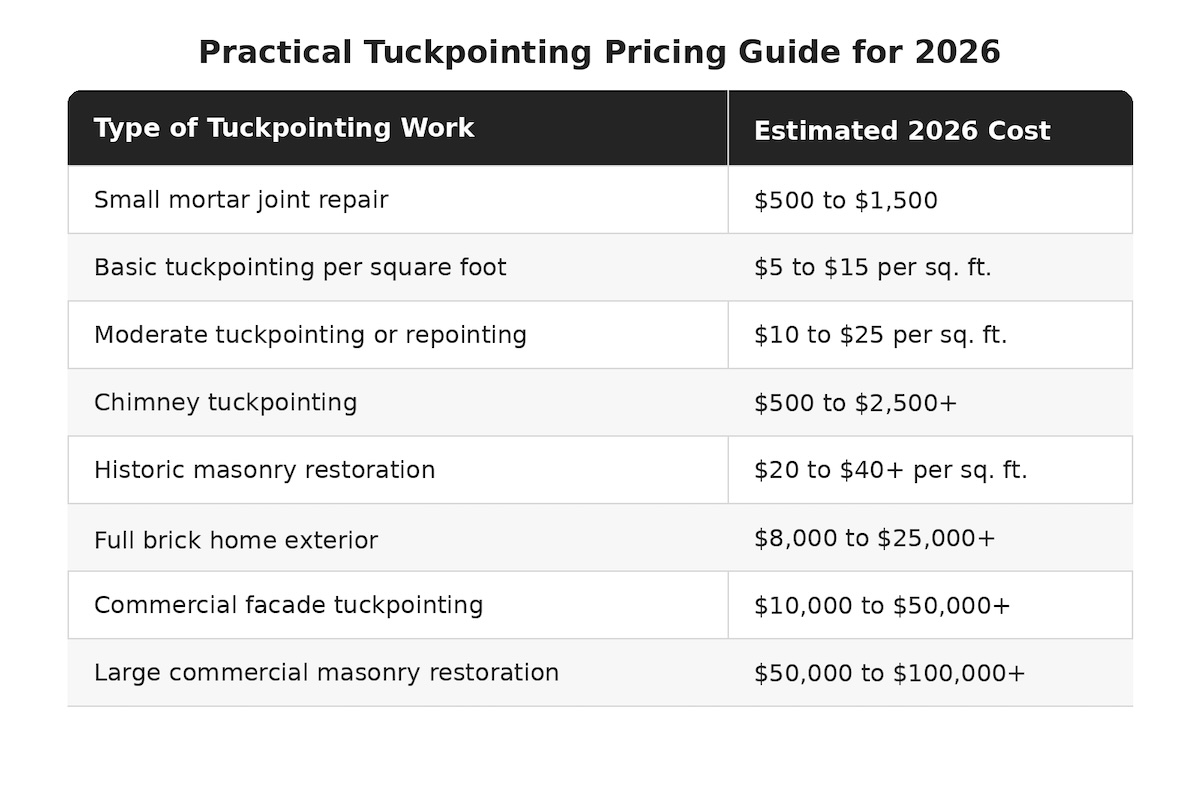
These numbers are best used as planning ranges, not fixed quotes. HomeAdvisor reports that tuckpointing commonly costs $500 to $2,500 for a 100-square-foot brick section, with labor accounting for most of the cost. Angi lists chimney tuckpointing at an average of around $1,200, with many standard projects ranging from $500 to $2,500.
For commercial properties, Dixon Inc’s own tuckpointing cost guidance notes that small repairs may start around $5 to $10 per square foot, while large commercial properties can range from $10,000 to $50,000, depending on scale and detail requirements.
Why Tuckpointing Prices Vary So Much
Tuckpointing is labor-intensive masonry work. The mason is not simply applying new mortar over old mortar. Proper restoration requires grinding or cutting out deteriorated mortar, cleaning the bed joints and head joints, preparing the masonry surface, matching the mortar, applying the new material, tooling the joints, and cleaning the finished wall.
That is why the cost can change significantly from one project to another.
Extent of Mortar Deterioration
Minor mortar cracks cost less to repair than deep joint failure. If only a few small areas need attention, the project may stay closer to the lower end of the price range. But if the mortar is soft, powdery, missing, or deeply eroded, more material must be removed and replaced.
Severe deterioration can also reveal other problems, such as:
- Loose bricks
- Spalling brick
- Bulging masonry walls
- Rusted steel lintels
- Water damage behind the wall
- Chimney crown damage
- Foundation settlement
- Failed flashing
- Deteriorated parapet walls
Once structural masonry repairs are needed, the project becomes more expensive than basic tuckpointing.
Wall Height and Accessibility
A one-story brick wall with easy access is less expensive than a tall commercial facade, chimney, church wall, apartment building, or multi-story masonry structure.
Higher walls often require:
- Scaffolding
- Lifts
- Fall protection
- Extra labor
- More setup time
- Street or sidewalk access planning
- Commercial safety procedures
This is a major reason commercial tuckpointing in Detroit costs more than simple residential mortar repair.
Chimney Tuckpointing
Chimneys are exposed to rain, snow, ice, wind, and temperature swings from all sides. Because of this, chimney mortar often deteriorates faster than wall mortar.
Chimney tuckpointing may include:
- Mortar joint repair
- Brick replacement
- Chimney crown repair
- Flashing inspection
- Waterproofing
- Cap installation
- Flue or liner inspection
A basic chimney tuckpointing project may cost a few hundred dollars, but taller chimneys, severely damaged chimneys, or chimneys requiring scaffolding can cost much more.
Mortar Matching
Mortar matching is one of the most important parts of quality tuckpointing. The new mortar should match the existing mortar in color, texture, composition, strength, and joint profile.
This is especially important for older Detroit brick buildings. Historic masonry often uses softer brick and lime-based mortar. If a mason uses mortar that is too hard, it can damage the surrounding brick by trapping moisture or forcing stress into the masonry units.
Proper mortar matching may involve:
- Lime mortar
- Portland cement mortar
- Sand color matching
- Mortar analysis
- Pigment matching
- Joint profile matching
- Historic masonry preservation methods
This adds time and skill to the project, which can increase cost.
Brick Type and Building Age
Detroit has many older properties built with clay brick, common brick, face brick, glazed brick, stone masonry, concrete block, and decorative masonry details. Some buildings also include limestone, terra cotta, cast stone, or ornamental brickwork.
Historic brickwork and soft brick require more careful restoration than newer masonry. Older mortar joints may be narrow, uneven, or deeply weathered. Decorative facades, arches, columns, parapet walls, cornices, and commercial storefronts also require more detailed workmanship.
Project Size
Small projects often have a higher cost per square foot because contractors still need to account for mobilization, travel, setup, tools, equipment, and labor. Larger projects may have a lower cost per square foot, but the total price will be higher because there is more wall area to repair.
For example, a small spot repair may cost $500 to $1,500 even if the actual area is limited. A full commercial facade may cost tens of thousands of dollars because of scaffolding, safety planning, labor hours, and the amount of mortar joint repair required.
Detroit-Specific Factors That Affect Tuckpointing Cost
Detroit masonry has its own challenges. The local climate, building age, and architectural history all affect tuckpointing needs.
Freeze-Thaw Cycles
Freeze-thaw damage is one of the biggest causes of mortar joint failure in Michigan. When water enters small cracks in the mortar and freezes, it expands. This puts pressure on the brick and mortar. Over repeated winter cycles, the mortar begins to break down.
Common signs of freeze-thaw damage include:
- Cracked mortar joints
- Missing mortar
- Loose brick
- Flaking brick faces
- Spalling masonry
- Interior water stains
- Efflorescence
- Bulging walls
Tuckpointing helps stop water from entering the wall system and reduces the risk of further masonry damage.
Older Brick Buildings
Many Detroit buildings were built decades ago and have gone through years of exposure to moisture, pollution, settlement, and seasonal weather. Older buildings may need more than basic mortar repair.
A tuckpointing contractor may also need to evaluate:
- Wall stability
- Brick condition
- Flashing
- Coping stones
- Lintels
- Weep holes
- Parapet walls
- Expansion joints
- Waterproofing systems
This is especially important for commercial masonry, where neglected mortar joints can create safety hazards and expensive facade repair issues.
Historic Properties
Historic masonry restoration requires extra care. If a property is located in a historic district or has architectural significance, the work may need to follow preservation guidelines. The goal is not just to repair the wall but to preserve the original appearance and masonry system.
This can increase costs because the contractor may need to use historically appropriate mortar, match original joint profiles, preserve existing brick, and avoid aggressive grinding methods that could damage the masonry.
Signs Your Detroit Property Needs Tuckpointing
Tuckpointing should be done before brick walls become unstable or water damage spreads. Here are the most common signs to watch for.
Cracked or Missing Mortar
If mortar joints are cracked, recessed, soft, or missing, water can enter the masonry wall. This is one of the clearest signs that tuckpointing is needed.
Loose or Shifting Bricks
Loose bricks indicate that the mortar is no longer doing its job. This can become a serious structural concern if ignored.
Spalling Brick
Spalling happens when the face of the brick flakes, chips, or breaks away. It is often caused by moisture entering the masonry and freezing.
White Powder on Brick
White powdery stains are called efflorescence. This occurs when water moves through masonry and leaves salt deposits behind. Efflorescence does not always mean major damage, but it is a sign that moisture is moving through the wall.
Water Leaks or Interior Stains
If you notice water stains, peeling paint, damp walls, or musty odors near brick surfaces, damaged mortar joints may be allowing moisture into the building envelope.
Chimney Deterioration
Chimneys often show early signs of mortar failure. Look for cracked joints, leaning brick, missing mortar, damaged crowns, or water stains near the fireplace.
Residential Tuckpointing Costs in Detroit
Residential tuckpointing usually involves homes, garages, porches, chimneys, foundations, garden walls, and exterior brick walls.
Common residential projects include:
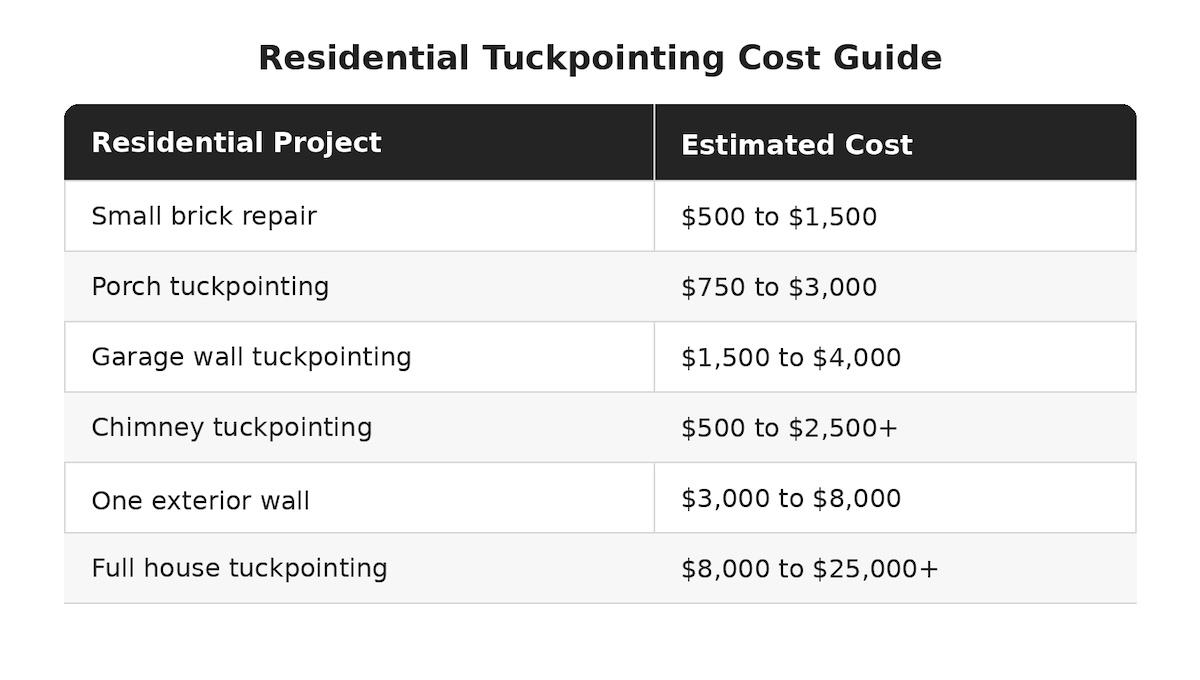
A small repair may be enough if only a few joints are damaged. But if the home has widespread mortar erosion, full-wall repointing may be necessary.
Commercial Tuckpointing Costs in Detroit
Commercial tuckpointing is usually more complex than residential work because commercial buildings are larger, taller, and often harder to access. Projects may involve office buildings, retail centers, schools, churches, apartment complexes, warehouses, industrial facilities, and multi-story brick facades.
Commercial pricing can vary widely based on:
- Building height
- Square footage
- Facade condition
- Scaffolding or lift requirements
- Pedestrian safety needs
- Historic restoration requirements
- Brick replacement needs
- Waterproofing or sealant work
- Lintel or flashing repairs
- Project schedule and phasing
For basic commercial tuckpointing, smaller projects may start around $10,000. Larger facade restoration projects can reach $50,000 or more, especially when scaffolding, brick replacement, structural repair, or detailed mortar matching is required.
Is Tuckpointing Worth the Cost?
Yes, tuckpointing is usually worth the cost because it helps prevent larger and more expensive masonry problems.
Damaged mortar allows water to enter the wall. Once moisture gets inside, it can lead to brick damage, mold issues, interior water leaks, rusted metal supports, insulation damage, and structural deterioration.
Tuckpointing can help:
- Extend the life of brickwork
- Reduce water infiltration
- Protect structural integrity
- Improve curb appeal
- Preserve historic masonry
- Prevent expensive brick replacement
- Improve building envelope performance
- Maintain property value
For commercial properties, timely tuckpointing can also reduce liability risks related to loose brick, falling mortar, facade instability, and water intrusion.
How Long Does Tuckpointing Last?
Quality tuckpointing can last for decades when performed correctly. The lifespan depends on mortar quality, workmanship, wall exposure, drainage, brick condition, and maintenance.
In Detroit, walls exposed to heavy moisture, poor drainage, or repeated freeze-thaw stress may need maintenance sooner than protected walls. Chimneys, parapets, and exposed commercial facades often require closer inspection because they receive more weather exposure.
To extend the life of tuckpointing:
- Inspect brickwork annually
- Keep gutters and downspouts working properly
- Repair flashing issues quickly
- Address roof leaks
- Avoid trapping moisture with improper sealants
- Fix drainage problems near the foundation
- Schedule masonry inspections after harsh winters
Can You Tuckpoint in Winter in Detroit?
Tuckpointing can be difficult in cold weather because mortar needs the right temperature to cure properly. Many masonry contractors prefer to complete tuckpointing during spring, summer, and fall.
Cold-weather masonry work is possible, but it may require heating, tenting, additives, protection from freezing, and careful curing procedures. That can increase labor and setup costs.
For most Detroit property owners, the best time to schedule tuckpointing is before winter arrives. Spring and summer are also popular, but contractor schedules may fill quickly during peak masonry season.
How to Choose a Tuckpointing Contractor in Detroit
Choosing the right masonry contractor is just as important as understanding the cost. Poor tuckpointing can damage brick, trap moisture, or fail prematurely.
Before hiring a contractor, ask:
- Do you specialize in masonry restoration?
- Have you worked on Detroit brick buildings?
- Do you provide commercial tuckpointing?
- Will you match the existing mortar?
- What type of mortar will you use?
- Will the damaged mortar be removed to the proper depth?
- Is scaffolding or lift equipment included?
- Will you replace damaged bricks if needed?
- Is cleanup included?
- Do you carry insurance?
- Can you provide a written estimate?
- Do you have experience with historic masonry?
Avoid contractors who simply smear mortar over existing joints. That is not proper tuckpointing and usually fails quickly.
How to Save Money on Tuckpointing
Tuckpointing is not the cheapest repair, but there are ways to control costs.
Repair Early
Small mortar repairs are much less expensive than full brick replacement or structural wall repair. If you see cracked or missing mortar, schedule an inspection before the damage spreads.
Bundle Masonry Repairs
If you need chimney repair, brick replacement, lintel repair, and tuckpointing, bundling the work may be more efficient than scheduling separate projects.
Prioritize High-Risk Areas
If the budget is limited, prioritize areas where water is entering the wall or where mortar failure could create safety issues.
Schedule Before Peak Season
Spring and summer can be busy for masonry contractors in Michigan. Planning may help you avoid delays.
Get a Detailed Estimate
A good estimate should explain the scope of work, wall area, mortar type, access requirements, brick replacement needs, cleanup, and any exclusions.
Frequently Asked Questions About Tuckpointing Cost in Detroit
How much does tuckpointing cost in Detroit in 2026?
Most tuckpointing projects in Detroit cost between $5 and $25 per square foot. Standard Detroit-area brick tuckpointing may fall closer to $8 to $12 per square foot for basic work, while complex, historic, chimney, or commercial projects can cost more.
Why is tuckpointing so expensive?
Tuckpointing is expensive because it is labor-intensive. The contractor must remove old mortar, clean the joints, match the mortar, apply new material, tool the joints, and clean the masonry surface. Scaffolding, height, access, and restoration details can also increase the cost.
How much does chimney tuckpointing cost?
Chimney tuckpointing often costs $500 to $2,500 for standard projects. Larger chimneys, tall chimneys, severe damage, brick replacement, or crown repairs can increase the price.
Is tuckpointing the same as repointing?
Not exactly. Repointing means replacing deteriorated mortar. Tuckpointing includes mortar repair but is often more appearance-focused, using decorative lines to create a clean finished look. In many local searches, people use both terms interchangeably.
How do I know if my brick needs tuckpointing?
You may need tuckpointing if you notice cracked mortar, missing mortar, loose brick, spalling brick, water stains, efflorescence, or visible gaps between bricks.
Does tuckpointing prevent water damage?
Yes, proper tuckpointing helps reduce water infiltration by restoring damaged mortar joints. However, other issues such as flashing failure, roof leaks, bad drainage, or cracked chimney crowns may also need repair.
Can tuckpointing increase property value?
Tuckpointing can improve curb appeal, protect structural integrity, and reduce future repair risks. For historic homes and commercial brick buildings, quality masonry restoration can support long-term property value.
Conclusion
Tuckpointing cost in Detroit depends on the condition of your mortar joints, the size of the project, the height of the building, access requirements, brick condition, mortar matching, and whether the work involves residential or commercial masonry. For 2026, most property owners should expect tuckpointing to fall somewhere between $5 and $25 per square foot, with higher costs for chimneys, historic masonry, commercial facades, and structural repairs.
At Dixon Inc, we understand how important strong masonry is for commercial buildings, historic properties, and long-lasting brick structures. Detroit’s weather can be tough on mortar joints, but timely tuckpointing can help protect your building from water infiltration, freeze-thaw damage, brick deterioration, and costly facade repairs.
If your brickwork is showing signs of cracked mortar, missing joints, spalling brick, or moisture problems, our team at Dixon Inc can help evaluate the condition of your masonry and recommend the right repair approach. From tuckpointing and repointing to commercial masonry restoration, we focus on durable workmanship, proper mortar compatibility, and long-term protection for your building.