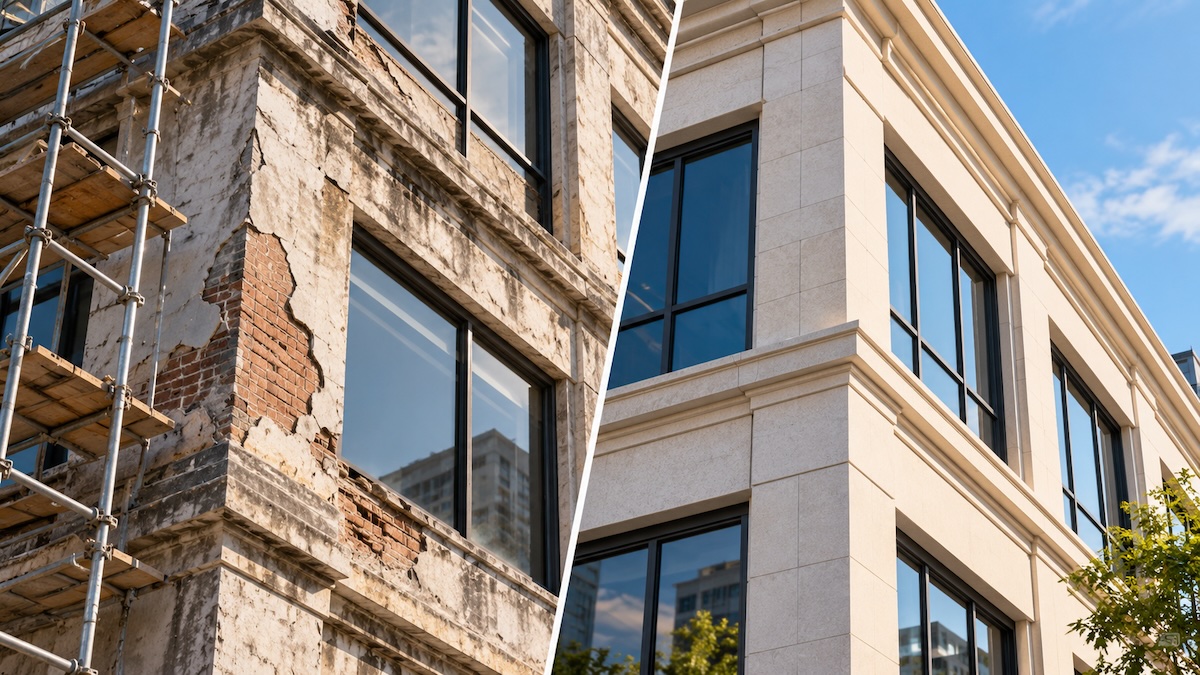
Cracked mortar, flaking brick, and recurring leaks can leave building owners with a difficult question: will a few repairs solve the problem, or does the exterior need more extensive work?
Commercial facade restoration repairs deteriorated exterior materials and components to improve a building’s condition, weather resistance, and appearance. The scope depends on the cause of the damage and how far it extends.
For commercial property owners in Detroit, an assessment helps separate urgent concerns from work that can be planned. At Dixon Inc., we provide facade restoration services that include facade surveys, water leak investigation, masonry repairs, and project budgeting.
This guide explains the warning signs, what restoration involves, and how to prepare for a contractor discussion.
Facade Repair vs. Restoration: What Is the Difference?
Facade repair addresses a specific defect, such as a damaged mortar joint or failed sealant around a window. Restoration combines related repairs to address more widespread deterioration.
A building with sound masonry and one damaged area may need a localized repair. Recurring leaks, extensive mortar loss, and deteriorated supports may require a broader restoration project.
Restoration does not necessarily mean replacing the entire facade. The goal is to retain sound materials and repair or replace components that can no longer perform as intended.
Signs Your Commercial Building May Need Facade Restoration
Visible damage tells you where to start looking. Its extent, location, and progression help determine the next step.
Cracked or Missing Mortar
Crumbling mortar, open joints, and gaps around brick or stone can allow moisture into the wall.
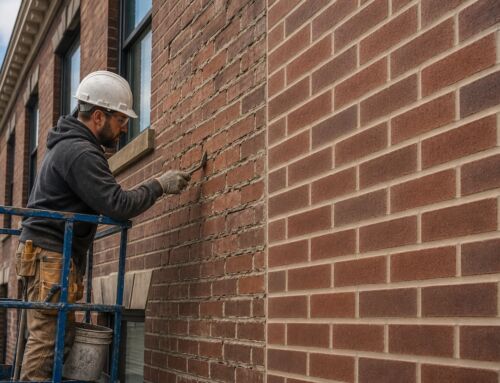
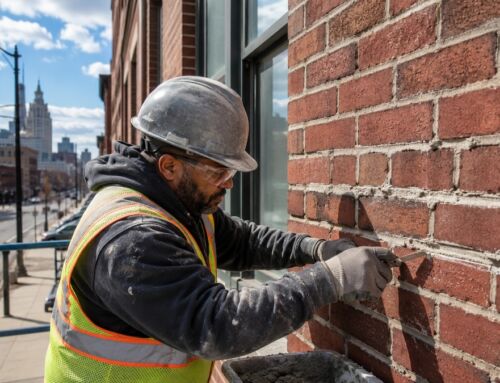
Localized damage may need repointing: removing deteriorated mortar and replacing it with compatible material. Widespread deterioration or joints that fail again after repairs require closer investigation.
Before replacing mortar, the contractor should consider whether leaks, drainage problems, or movement are contributing to the damage. Our guide to tuckpointing and mortar joint repair explains the work in more detail.
Flaking Brick or Damaged Stone
Spalling occurs when pieces break or flake away from a masonry surface. You may notice recessed brick faces, broken edges, or fragments below the wall.
An assessment should establish how deeply the damage extends, whether nearby materials remain secure, and what caused the deterioration. Replacing damaged masonry without addressing the cause can leave the problem unresolved.
Water Leaks That Keep Returning
If leaks return after caulking or patching, the original repair may not have addressed the entry point.
Record when the leak appears. Does it happen during wind-driven rain, after snow melts, or only during prolonged storms? Does it affect one room or several floors?
Water can travel through a wall before appearing indoors. A stain beside a window does not necessarily mean the window is the source.
Rust Stains or Cracks Above Windows and Doors
Rust staining combined with cracking or displaced masonry can indicate a need to examine metal supports.
A lintel is a horizontal member that supports masonry above an opening. Where deterioration is suspected, the assessment should establish the lintel’s condition and whether engineering input is needed.
Rust stains alone do not confirm structural failure.
Bulging Masonry or Loose Coping
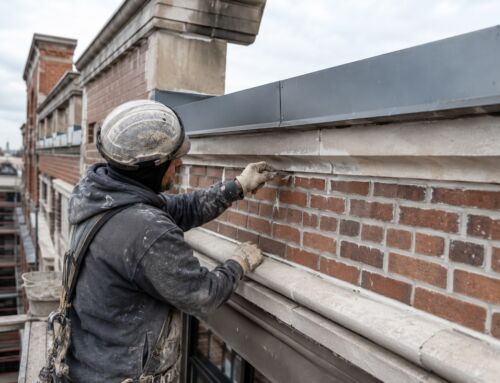
Bowing walls, displaced masonry, falling fragments, and loose coping—the caps along the top of a wall—need prompt attention.
Keep people clear of visibly unstable materials and arrange a professional assessment. Do not attempt to remove loose pieces yourself.
Recurring White Deposits or Failed Patches
White deposits on brick may be efflorescence: salts carried to the surface by moisture. These deposits alone do not prove that a building needs extensive restoration, but their recurrence can warrant investigation.
Cracks or patches that repeatedly reappear also deserve attention. The repair method, material, or underlying cause may need to be reconsidered.
Will Localized Repairs Be Enough?
The answer depends on whether the damage is isolated or part of a wider problem.
| Factor | Why It Matters |
|---|---|
| Building Height and Access | Lifts, scaffolding, and pedestrian protection affect project requirements. |
| Extent of Damage | Localized repairs require a different scope of work than repairs across multiple elevations. |
| Concealed Deterioration | Opening the wall may reveal additional repairs. |
| Material Matching | Specialty brick, stone, or architectural details may take longer to source. |
| Building Operations | Restricted hours and phased access can affect productivity. |
| Weather | Installation and curing conditions must suit the repair materials. |
| Design and Approvals | Some projects need additional design work or applicable approvals. |
A useful proposal connects each repair to an observed condition. It should explain what the work will address and identify anything that remains uncertain.
Concerned about your building’s exterior? Call Dixon Inc. at (313) 535-6534 to discuss your property and the next step toward an estimate.
What to Expect During Commercial Facade Restoration
1. Assessment and Investigation
The project begins with an examination of the exterior and a review of the building’s repair history.
Drawings, inspection reports, photographs, and records of recurring leaks can help the team understand the problem. Depending on the findings, the investigation may require elevated access, testing, or selective openings to examine concealed components.
Structural concerns may require an engineer. Ask what the initial assessment includes and when further investigation would be necessary.
2. Repair Scope and Estimate
The proposal should give you a clear basis for budgeting and comparing contractors.
Look for:
- Repair locations and estimated quantities.
- Proposed materials and methods.
- Access equipment and site protection.
- Included work, exclusions, and allowances.
- A process for approving additional repairs.
- Proposed phases and scheduling assumptions.
Two estimates may cover different work even when they describe the same visible problem. Compare the scope as well as the price.
3. Access and Occupant Planning
Before work begins, identify entrances, loading areas, parking spaces, and occupied rooms that must remain accessible.
Scaffolding, lifts, deliveries, and protected work zones can affect daily operations. Tenants should know where work will take place, when disruption is expected, and whom to contact.
For Detroit properties with limited space around the building, access planning can be a significant part of the project.
4. Restoration Work
The assessment determines which repairs are appropriate. Dixon’s facade restoration capabilities include:
- Brick and stone repair or replacement.
- Mortar matching and joint restoration.
- Lintel repair and replacement.
- Parapet and coping repair.
- Joint sealant replacement.
- Structural steel rehabilitation.
Replacement materials need to suit the existing wall. On older masonry buildings, mortar compatibility matters as much as color and appearance. Mortar that is too strong or restricts moisture movement can damage surrounding masonry.
Where leaks involve adjoining systems, the project may also require coordination with thermal and moisture protection work.
5. Final Review and Maintenance Planning
At closeout, review the completed work against the agreed scope and record any outstanding items.
Request applicable warranty information, repair documentation, and maintenance guidance. Keeping these records helps future contractors understand what was repaired and which materials were used.
Our commercial facade maintenance guide explains how to monitor the exterior after restoration.
What Affects Facade Restoration Cost and Timeline?
The main cost and scheduling factors are the repair scope, access requirements, and building conditions.
| Factor | Why It Matters |
|---|---|
| Building Height and Access | Lifts, scaffolding, and pedestrian protection affect project requirements. |
| Extent of Damage | Localized repairs require a different scope of work across multiple elevations. |
| Concealed Deterioration | Opening the wall may reveal additional repairs. |
| Material Matching | Specialty brick, stone, or architectural details may take longer to source. |
| Building Operations | Restricted hours and phased access can affect productivity. |
| Weather | Installation and curing conditions must suit the repair materials. |
| Design and Approvals | Some projects need additional design work or applicable approvals. |
Ask the contractor to explain the schedule’s main dependencies and how unexpected conditions will be handled.
A meaningful estimate starts with a defined scope. A price based only on the building’s size may overlook the issues that determine the actual cost.
Can the Building Stay Open During Restoration?
A commercial building may remain occupied when the work can be safely separated from occupants and public access.
Some projects can proceed one elevation at a time. Others may require temporary entrance changes or restrictions near affected rooms.
Discuss business hours, deliveries, tenant needs, and sensitive operations before agreeing to the work sequence. Continued occupancy should be part of the project plan.
What to Ask a Facade Restoration Contractor
Before approving the work, ask:
- What caused the damage, and what still needs investigation?
- Why are these repair methods and materials appropriate?
- What experience do you have with similar buildings?
- How will occupants and pedestrians be protected?
- How will additional work be documented and approved?
- What records and maintenance guidance will we receive?
For an older building, also ask how sound original materials will be preserved and how replacements will be selected.
Clear answers help you understand what the proposed work is intended to achieve.
Plan Your Detroit Facade Restoration With Dixon Inc.
If your building has recurring leaks, deteriorated mortar, or damaged masonry, we can help you take the next step.
At Dixon Inc., we bring facade surveys, leak investigation, restoration services, and budgeting together to help owners develop a practical project scope.
When you contact us, share:
- The property address and approximate building height.
- Photos and a short description of the problem.
- Any previous inspection or repair records.
- Access restrictions and your preferred timing.
Call (313) 535-6534 or request a detailed estimate to discuss your commercial facade restoration project with our team.
Frequently Asked Questions
Does facade restoration require replacing all the brick or stone?
No. Sound materials can often remain while damaged areas are repaired or replaced. The assessment determines whether concealed supports or other components also need attention.
Can facade restoration stop recurring water leaks?
It can address leaks when the entry points and contributing defects are correctly identified and repaired. Surface patching may be insufficient when the source involves flashing, adjoining systems, or concealed conditions.
Can facade restoration be completed in phases?
Some projects can be divided by elevation, repair type, or priority. The sequence must account for safety, connected repairs, and access costs. Urgent conditions should be addressed first.
Do historic buildings need different restoration materials?
Historic masonry requires careful material selection. Replacement mortar, brick, and stone should be physically compatible with the existing wall as well as appropriate in appearance.