In masonry construction, a bond beam plays a crucial role in enhancing the strength, stability, and integrity of structures. Whether you’re a construction professional or a homeowner curious about masonry walls, understanding bond beams is essential. This guide will explore what bond beams are, how they work, their benefits, and their role in construction projects.
What is a Bond Beam?
A bond beam is a horizontal structural component integrated into masonry walls to reinforce and stabilize them. It’s typically made from concrete masonry units (CMUs) designed with channels or grooves to hold horizontal reinforcement.
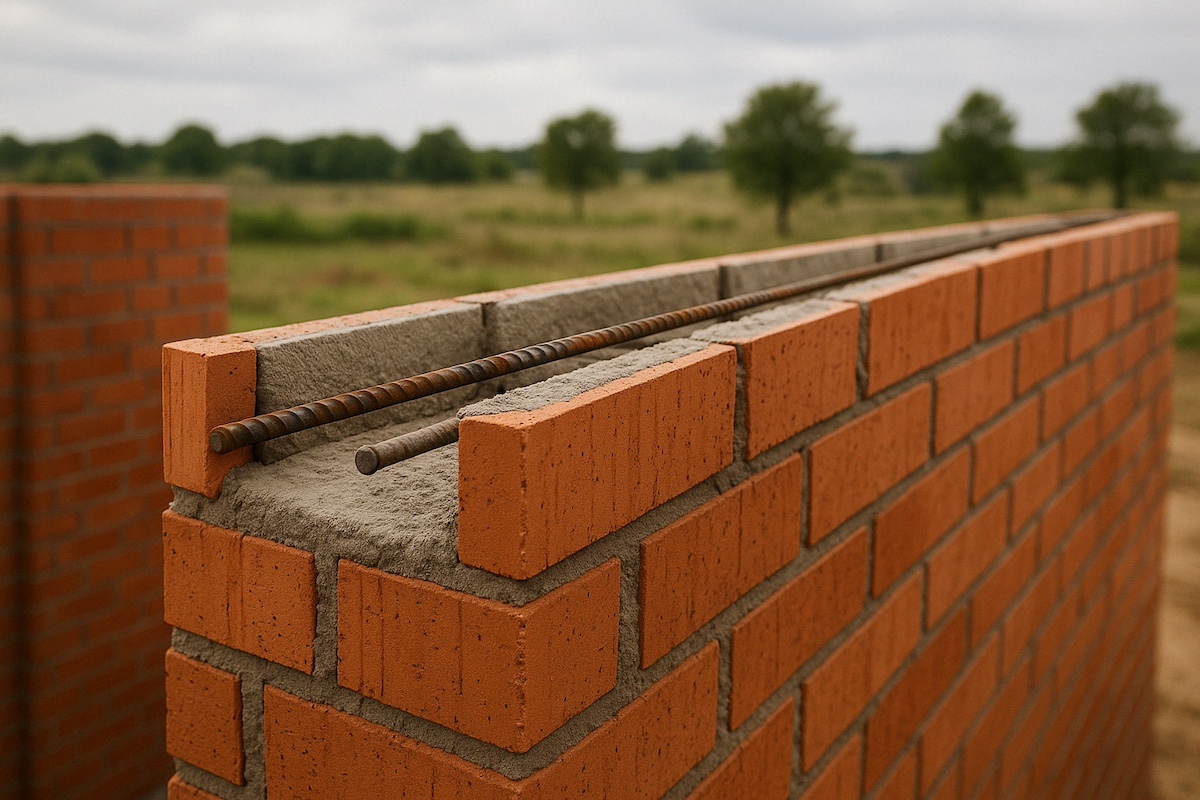
These grooves are filled with grout and embedded steel reinforcement bars (rebars), creating a continuous beam that ties the wall together horizontally.
Key Features of a Bond Beam
- Materials: Bond beams are usually constructed with CMUs, grout, and steel reinforcement.
- Placement: Commonly placed at the top of walls, around openings, or at regular intervals along the height of a wall.
- Purpose: They provide structural support, distribute loads evenly, and resist lateral forces like wind and seismic activity.
Technical Definition of a Bond Beam
In simple terms, a bond beam is a reinforced section of a masonry wall that helps tie the wall together. From a technical masonry perspective, it is a fully grouted horizontal, sloped, or stepped course that contains steel reinforcement.
This means a bond beam is not always a “beam” in the way people usually think of one. It does not always span across an opening like a lintel. Instead, it often runs through part of the wall to strengthen the masonry, improve load transfer, and help the wall act as one connected structural system.
Bond beams are especially important in commercial masonry construction because they help walls handle wind loads, roof loads, floor connections, and other structural forces.
Purpose and Function of a Bond Beam
Bond beams are integral to masonry construction for several reasons:
1. Structural Reinforcement
Bond beams prevent cracks in walls and enhance overall stability by providing horizontal reinforcement. This is particularly important for tall or load-bearing walls.
2. Load Distribution
They help distribute loads from above (like the weight of roofs or floors) evenly across the structure, reducing stress points and potential damage.
3. Integration with Structural Elements
Bond beams serve as anchorage points for connecting other structural components, such as lintels, columns, and roof trusses.
4. Seismic Resistance
In earthquake-prone areas, bond beams improve a wall’s ability to withstand lateral forces, reducing the risk of collapse.
Where Are Bond Beams Used in Masonry Walls?
Bond beams are used in areas where a masonry wall needs additional strength, stability, or continuity. Their exact placement depends on the structural design of the building, but they are commonly found in several key areas.
Bond beams may be used at the top of masonry walls to help tie the wall together. They are also often used in parapet walls, around large wall openings, at roof and floor connection points, and at intermediate wall heights in taller masonry walls.
In commercial buildings, bond beams can also help support or connect with structural elements such as roof systems, floor systems, steel joists, and wall anchors. They may also be used in freestanding walls or long wall sections that are exposed to wind or lateral pressure.
Common locations include:
- The top course of masonry walls
- Parapet walls
- Roof and floor diaphragm connection points
- Around doors, windows, and large openings
- Intermediate wall heights in tall walls
- Long commercial wall sections
- Freestanding masonry walls
- Areas where structural drawings call for additional reinforcement
Because every building is different, bond beam placement should always follow the project’s structural drawings, engineering requirements, and masonry specifications.
Types of Bond Beams
Bond beams can be tailored to meet specific structural needs. Here are the main types:
1. Horizontal Bond Beams
These are placed at specific intervals along a wall to reinforce it horizontally and improve its load-bearing capacity.
2. Continuous Bond Beams
Used to provide uniform reinforcement across the entire length of a wall, continuous bond beams are ideal for larger structures.
3. Stepped Bond Beams
Designed for sloping or stepped walls, these beams ensure consistent reinforcement, even in non-linear structures.
Construction Process of a Bond Beam
Building a bond beam requires careful planning and execution. Here’s a step-by-step breakdown:
Step 1: Preparation
- Design: Determine the placement and specifications of the bond beam based on structural requirements.
- Materials: Choose high-quality CMUs, steel reinforcement, and grout.
Step 2: Installation
- Laying CMUs: Use special bond beam blocks with channels or notches to create the beam.
- Adding Reinforcement: Insert steel rebar into the channels to provide horizontal strength.
- Grouting: Fill the channels with grout to encase the reinforcement and create a solid beam.
Step 3: Integration
- Alignment: Ensure the bond beam aligns seamlessly with the rest of the masonry wall.
- Curing: Allow adequate time for the grout to cure, ensuring maximum strength.
What Is a Bond Beam Block?
A bond beam block is a specially shaped concrete masonry unit used to create a reinforced course within a masonry wall. Unlike a standard CMU, a bond beam block is designed to hold horizontal steel reinforcement and grout.
This allows masons to place rebar through the wall and fill the block with grout, creating a stronger and more connected section of masonry.
U-Shaped Bond Beam Blocks
U-shaped bond beam blocks have an open channel that makes it easier to place horizontal rebar and grout. Once the reinforcement is installed, the channel is filled with grout to create a solid reinforced course.
These blocks are commonly used when the project requires a continuous reinforced section across part of the wall.
Knockout Bond Beam Blocks
Knockout bond beam blocks have removable sections that can be knocked out in the field. Once removed, they create a channel for horizontal reinforcement and grout.
These blocks are useful when masons need flexibility during construction, especially when bond beam placement must coordinate with other wall reinforcement or project details.
Advantages of Using Bond Beams
Bond beams offer several benefits that make them indispensable in masonry construction:
- Enhanced Durability: They increase the lifespan of masonry walls by reducing cracking and damage.
- Improved Seismic Performance: Bond beams help structures withstand earthquakes by providing lateral reinforcement.
- Increased Load Capacity: Walls reinforced with bond beams can bear heavier loads without compromising stability.
- Better Structural Stability: They prevent walls from bowing or collapsing under pressure.
Applications of Bond Beams in Masonry
Bond beams are versatile and used in various construction scenarios:
1. Residential Buildings
In homes, bond beams provide reinforcement for walls supporting roofs or floors.
2. Commercial Buildings
In commercial structures like offices and schools, bond beams enhance wall stability and help meet building code requirements.
3. Retaining Walls
Bond beams prevent soil displacement and improve the durability of retaining walls.
4. Industrial Structures
Factories and warehouses benefit from bond beams’ ability to handle heavy loads and resist lateral forces.
Challenges in Bond Beam Construction
While bond beams are essential, their construction can pose challenges:
Common Issues
- Incorrect Placement: Misaligned beams can weaken the structure.
- Poor Grouting: Inadequate grouting reduces the beam’s strength.
- Improper Reinforcement: Missing or misaligned rebar can compromise stability.
Solutions
- Follow best practices during construction.
- Conduct regular inspections to ensure quality.
- Use experienced professionals for installation.
Bond Beams and Seismic Design
Bond beams are especially critical in seismic zones. Their horizontal reinforcement helps masonry walls withstand the lateral forces generated by earthquakes. By tying walls together and distributing stress evenly, bond beams reduce the likelihood of catastrophic failure.
FAQs
1. What is the difference between a bond beam and a lintel?
A bond beam is a horizontal reinforcement element running along the length of a wall, while a lintel is a horizontal beam placed over openings like doors and windows to support the weight above them.
2. Do all masonry walls require bond beams?
Not all walls require bond beams. Their use depends on the wall’s height, load requirements, and location in a seismic zone.
3. What materials are used for bond beam construction?
Common materials include CMUs, grout, and steel reinforcement bars (rebars).
4. How are bond beams reinforced?
Reinforcement is achieved by placing steel rebar within the grooves of bond beam blocks and filling them with grout.
5. Can bond beams be retrofitted in existing walls?
Yes, retrofitting bond beams involves cutting into existing walls, inserting reinforcement, and grouting the channels. It’s a specialized process best handled by professionals.
6. What is a bond beam in masonry?
A bond beam is a horizontal structural element used in masonry construction to provide strength, support, and stability to a wall. It is typically made from reinforced concrete and is integrated with the masonry units to distribute loads and resist lateral forces.
7. What is the purpose of a bond beam?
The primary purpose of a bond beam is to enhance the structural integrity of a masonry wall. It ties the wall together, distributes loads evenly, and prevents cracking or failure under stress, especially during seismic activity or heavy wind loads.
8. Is a bond beam the same as a lintel?
No. A bond beam reinforces and ties a masonry wall together horizontally. A lintel is used above an opening, such as a door or window, to support the masonry above that opening.
9. What is a bond beam block?
A bond beam block is a special concrete masonry unit designed to hold horizontal reinforcement and grout. It helps create a reinforced course within a masonry wall.
10. Where is a bond beam placed in a masonry wall?
Bond beams are commonly placed at the top of walls, in parapets, at roof and floor lines, around openings, and at intermediate wall heights when additional reinforcement is needed.
11. Why are bond beams fully grouted?
Bond beams are fully grouted so the steel reinforcement and masonry units can work together as one strong structural element. The grout locks the rebar in place and helps transfer loads through the wall.
12. Do bond beams help prevent cracks?
Bond beams can help with crack control when they are properly designed and placed. However, they must be coordinated with control joints and wall movement requirements.
13. Can a bond beam be sloped or stepped?
Yes. A bond beam can be horizontal, sloped, or stepped depending on the wall design and structural requirements.
14. Are bond beams required in every masonry wall?
No. Bond beam requirements depend on the wall height, load conditions, wind exposure, seismic requirements, openings, and the structural engineer’s design.
Conclusion
At Dixon Inc., we understand the critical role that bond beams play in ensuring the stability and durability of masonry structures. With decades of expertise in commercial construction, we specialize in delivering high-quality solutions tailored to meet your specific needs.
Whether you’re constructing a new building or reinforcing an existing one, our team is equipped to handle all aspects of bond beam installation with precision and care. Trust Dixon Inc. to bring strength and reliability to your masonry projects. Visit our website to learn more about our services and how we can support your next construction endeavor.