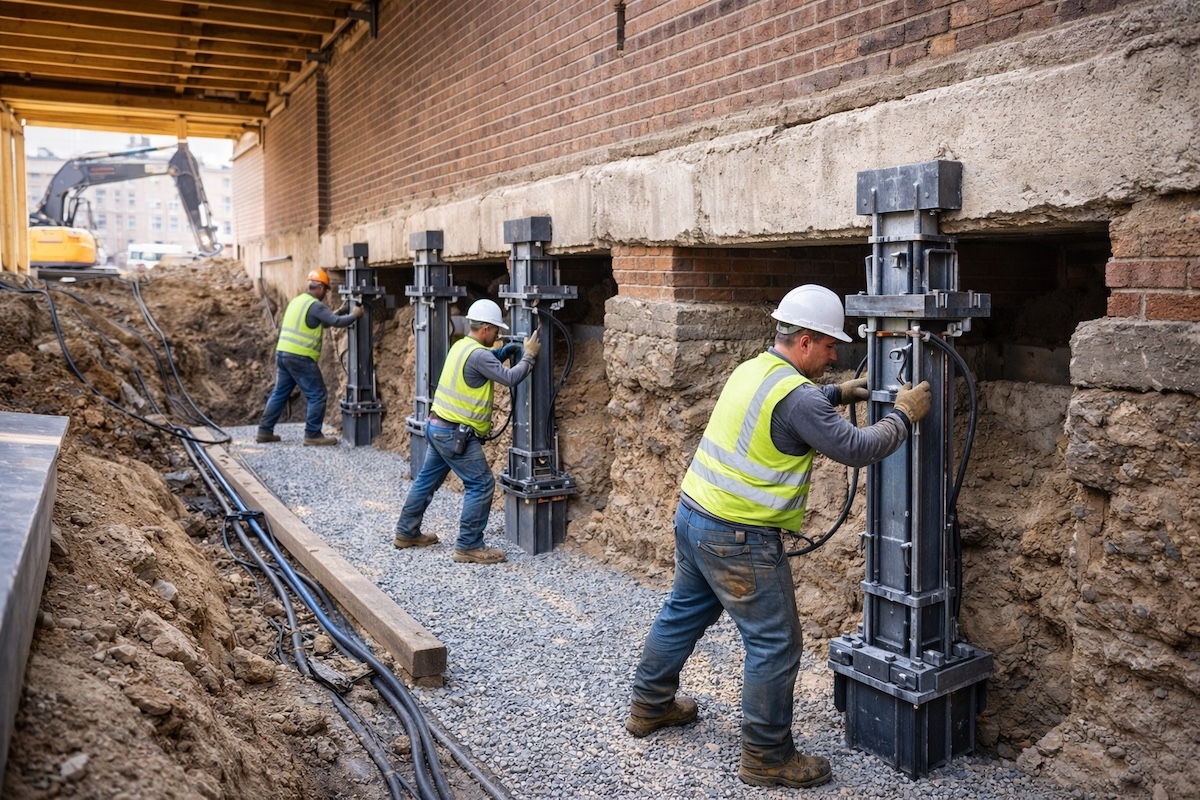
In commercial construction, the strength of a building begins below ground. No matter how well-designed the structure above may be, a weak or failing foundation can compromise safety, performance, and long-term value. This is where underpinning in masonry plays a critical role.
Underpinning is a proven construction technique used to strengthen and stabilize existing foundations. In commercial masonry buildings, such as offices, warehouses, retail spaces, and institutional facilities, underpinning helps address foundation settlement, soil issues, increased load demands, and aging structures. When done correctly, it restores stability, improves safety, and extends the life of the building.
In this guide, we’ll break down what underpinning in masonry involves, why it matters in commercial construction, the different methods used, and how it contributes to safer, more durable structures.
What Is Underpinning in Masonry?
Underpinning is the process of strengthening or extending an existing foundation so it can safely support a structure. In masonry buildings, underpinning typically involves reinforcing stone, brick, or block foundations that have weakened or were originally built to outdated standards.
Rather than replacing the entire foundation, underpinning works by transferring the building’s load to deeper, stronger soil or by increasing the foundation’s load-bearing capacity. This makes it a practical and cost-effective solution for many commercial properties.
It’s important to distinguish underpinning from general foundation repair. While repairs may address surface-level damage, underpinning solves the root cause of foundation movement by improving structural support at its base.
Why Underpinning Is Important in Commercial Construction
Commercial buildings face unique structural demands. They often carry heavier loads, experience constant foot traffic, and must meet strict safety and compliance standards. Underpinning helps meet these demands in several key ways.
First, it improves structural safety. A compromised foundation can lead to wall cracking, uneven floors, and, in severe cases, partial structural failure. Underpinning stabilizes the foundation and redistributes loads evenly.
Second, underpinning supports code compliance and modernization. Many older commercial masonry buildings were constructed before modern building codes existed. Underpinning allows these structures to meet current standards without demolition.
Finally, underpinning protects long-term property value. A stable foundation reduces future repair costs, increases tenant confidence, and makes the property more attractive to investors and buyers.
Common Causes That Require Masonry Underpinning
Soil-Related Issues
Soil conditions are one of the most common reasons underpinning becomes necessary. Weak, compressible, or shifting soil can no longer support the foundation properly. Erosion, poor compaction, and changes in groundwater levels often contribute to settlement in masonry structures.
Structural and Design Factors
Many older commercial buildings were built with shallow foundations that are insufficient for modern loads. Changes in building use, such as converting storage space into office or retail areas, can increase structural demands beyond what the original foundation can handle.
Environmental and External Factors
Nearby construction, excavation, or heavy traffic can disturb soil beneath existing foundations. In colder climates, repeated freeze-thaw cycles can also weaken soil and masonry materials over time, increasing the risk of settlement.
Types of Underpinning Methods Used in Masonry
Mass Concrete Underpinning
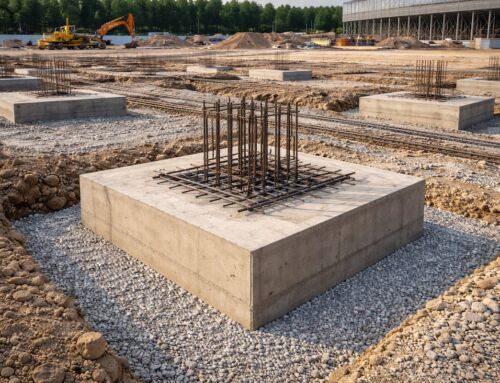
Mass concrete underpinning is one of the oldest and most widely used methods. It involves excavating sections beneath the existing foundation and filling them with concrete to create a stronger base.
This method works well for smaller commercial buildings and situations where soil conditions are predictable. While it can be labor-intensive, it remains reliable and cost-effective when space allows.
Beam and Base Underpinning
Beam and base underpinning uses reinforced concrete beams to distribute loads across a wider area. These beams transfer the building’s weight to concrete bases installed at strategic points.
This method is often used when foundations need support over longer spans or where mass concrete underpinning isn’t practical.
Mini-Piled Underpinning
Mini-piled underpinning uses small-diameter piles drilled deep into stable soil layers. These piles transfer loads away from weak surface soils.
This method is ideal for commercial sites with limited access, tight working conditions, or where vibration must be minimized to protect existing masonry.
Piled Underpinning Systems
For heavy commercial and industrial buildings, piled underpinning systems provide maximum load capacity. Steel or concrete piles are driven or drilled deep into the ground, offering strong and long-lasting support.
The Underpinning Process Step by Step
Every underpinning project begins with a structural assessment. Engineers evaluate the building, identify signs of settlement, and determine load requirements.
Next comes a soil investigation, which helps determine the most appropriate underpinning method. Soil testing ensures the new foundation support reaches stable ground.
During construction, excavation is done in carefully controlled sections to maintain stability. The underpinning system is then installed, followed by curing and gradual load transfer.
The process ends with final inspections and compliance checks to ensure the building meets safety and engineering standards.
Signs a Commercial Masonry Building May Need Underpinning
Foundation problems often show visible warning signs. Cracks in masonry walls—especially stair-step cracks—are a common indicator. Uneven or sloping floors, sticking doors and windows, and gaps around the foundation can also signal underlying issues.
Ignoring these signs can lead to more serious structural damage, making early intervention essential.
Challenges and Risks in Masonry Underpinning
Underpinning masonry structures requires careful planning. Masonry materials can be brittle, and improper sequencing may cause additional cracking or movement.
Maintaining structural stability during excavation is another challenge. This is why experienced engineers and contractors are critical to success. With the right expertise, risks can be effectively managed.
Cost Factors Associated With Masonry Underpinning
The cost of underpinning depends on several variables. Larger and heavier commercial buildings typically require more extensive work. Soil conditions, site accessibility, and the chosen underpinning method all influence costs.
While underpinning represents a significant investment, it often costs far less than foundation replacement or rebuilding after structural failure.
How Underpinning Improves Safety and Longevity of Commercial Buildings
Underpinning significantly enhances a building’s load-bearing capacity, reducing the risk of future settlement. It also stabilizes masonry walls, protects finishes, and supports long-term performance.
For building owners and facility managers, underpinning provides peace of mind, knowing the structure rests on a solid and reliable foundation.
Underpinning vs Other Foundation Strengthening Techniques
Techniques like slab jacking or surface-level repairs may address minor issues, but don’t offer the same long-term stability as underpinning. When foundation problems stem from soil weakness or insufficient depth, underpinning remains the most effective solution.
Choosing the Right Masonry Contractor for Underpinning
Successful underpinning depends on experience. Commercial projects require contractors who understand load transfer, soil behavior, and masonry construction. Detailed inspections, proper documentation, and strict safety standards should always be part of the process.
Conclusion
At Dixon Inc, we’ve seen firsthand how critical a strong foundation is to the safety and performance of commercial masonry buildings. Underpinning isn’t just a repair technique—it’s a long-term investment in structural integrity, occupant safety, and property value.
When foundations begin to fail, addressing the problem early with the right underpinning solution can prevent costly damage and extend the life of the building for decades. Our team approaches every underpinning project with careful analysis, proven methods, and a deep understanding of commercial masonry construction.
If you’re dealing with foundation concerns or planning upgrades to an existing masonry structure, working with experienced professionals makes all the difference. At Dixon Inc, we’re committed to delivering durable, code-compliant solutions that keep commercial buildings safe, stable, and built to last.