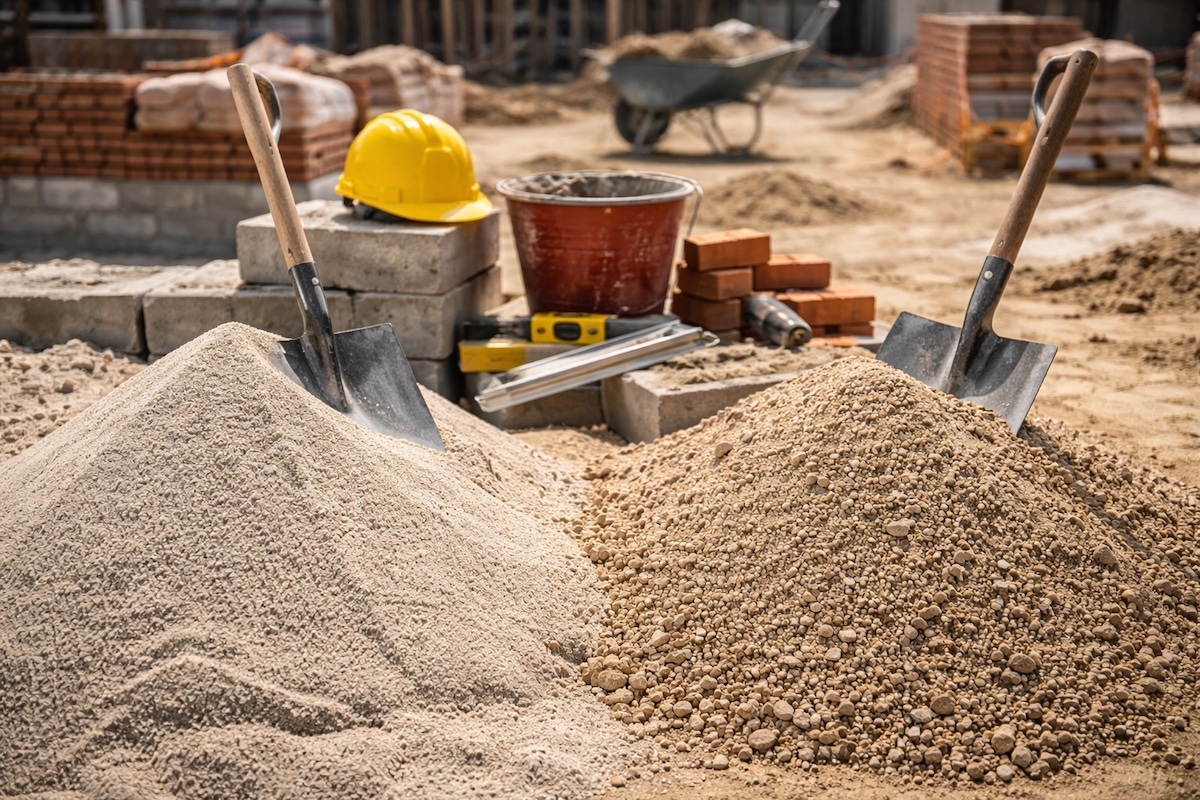
Choosing the right materials is one of the most critical decisions in any commercial masonry project. While cement and aggregates often receive most of the attention, sand plays a critical role in strength, durability, workability, and the final appearance of masonry and concrete work.
Two of the most commonly used sands in construction are masonry sand and concrete sand. Although they may look similar at first glance, they are designed for very different purposes. Using the wrong sand can lead to weak mortar joints, cracking, drainage problems, and early failure. This guide explains the differences in clear, practical terms so contractors and project managers can make confident material decisions.
What Is Masonry Sand?
Masonry sand is a fine, clean, and consistently graded sand made specifically for masonry applications. It is washed and screened to remove clay, silt, and organic material, resulting in a smooth and uniform product.
Because of its fine texture, masonry sand blends easily with cement and lime. This creates mortar that is easy to spread, shape, and finish while still providing strong bonding between bricks and blocks.
Key Characteristics of Masonry Sand
- Masonry sand has fine and smooth grains that improve workability
- It offers consistent particle size for uniform mortar mixes
- It is clean and washed, with minimal impurities
- Its lighter color supports clean, even mortar joints
- It allows excellent control during finishing
Common Uses of Masonry Sand in Commercial Projects
- Brick and block masonry mortar
- Tuckpointing and repointing work
- Stucco and plaster applications
- Decorative and architectural masonry
- Light-duty paver joint filling when specified
In commercial masonry, masonry sand is chosen for bonding performance, appearance, and ease of application rather than structural strength.
What Is Concrete Sand?
Concrete sand is a coarser sand with more angular particles. It is primarily used as a key ingredient in concrete mixes where strength and durability are essential. Like masonry sand, it is washed and graded, but the particles are larger and less uniform.
The angular shape allows concrete sand to lock together with cement and aggregate, increasing compressive strength and long-term performance.
Key Characteristics of Concrete Sand
- Coarse and angular particle structure
- High load-bearing capability
- Better drainage than finer sands
- Strong compatibility with concrete mixes
- Durable under heavy commercial use
Common Uses of Concrete Sand in Commercial Construction
- Concrete slabs and floors
- Footings and foundations
- Sidewalks, curbs, and parking areas
- Pipe bedding and trench backfill
- Paver base layers for high traffic zones
Concrete sand is selected when strength, stability, and durability are the primary goals.
Masonry Sand vs Concrete Sand: Key Differences
Understanding how these sands differ helps prevent costly mistakes on commercial projects.
Particle Size and Texture
Masonry sand has fine and rounded grains that create smooth mortar. Concrete sand is coarser and more angular, which improves strength but reduces workability for masonry joints.
Workability and Finish
Masonry sand produces mortar that spreads easily, fills joints properly, and delivers a clean, uniform finish. Concrete sand creates a rougher mix that is harder to tool and can lead to uneven joints and poor appearance.
Strength and Load-Bearing Performance
Concrete sand is designed for structural applications that must handle heavy loads. Masonry sand is not intended for structural concrete, but performs exceptionally well in bonding masonry units together.
Drainage and Moisture Control
Concrete sand allows better water movement, making it ideal for foundations and slabs. Masonry sand holds moisture slightly longer, which supports proper mortar curing but makes it unsuitable for drainage-focused applications.
Compatibility With Cement and Lime
Masonry sand works best in cement lime mortar mixes. Concrete sand is intended for use with cement and coarse aggregate in concrete, not mortar.
Which Sand Is Better for Commercial Masonry Projects?
The correct choice depends on how the sand will be used.
- Masonry sand is best for brickwork, blockwork, and architectural masonry where appearance and workability matter
- Concrete sand is best for slabs, foundations, and structural elements where strength and durability are required
Substituting one for the other often leads to problems. Concrete sand in mortar can cause weak bonding and cracking. Masonry sand in concrete can reduce structural strength and long-term performance.
Application-Based Recommendations
Brick and Block Masonry Walls
Masonry sand is the preferred option. It creates smooth mortar that bonds well and produces clean, professional-looking joints.
Structural Concrete and Footings
Concrete sand is essential. Its coarse texture supports compressive strength and long-lasting performance.
Paver Installations in Commercial Spaces
Concrete sand is typically used for the base layer because of its stability and drainage. Masonry sand may be specified for joints in light traffic areas, but project requirements should always be followed.
Stucco, Plaster, and Decorative Masonry
Masonry sand is ideal for these applications. It produces a smoother surface and makes finishing easier and more consistent.
Cost Differences Between Masonry Sand and Concrete Sand
Pricing depends on location, availability, and transportation. Masonry sand may cost slightly more due to finer washing and grading processes. Concrete sand is often more widely available in bulk for large projects.
However, selecting sand based only on price is a common mistake. Using the wrong sand can result in rework, repairs, and reduced lifespan, which costs far more than any initial savings.
Common Mistakes Contractors Make When Choosing Sand
- Using concrete sand for mortar because it is readily available
- Ignoring gradation and cleanliness requirements
- Overlooking project specifications and standards
- Mixing sand types across large projects causes inconsistency
These mistakes often lead to cracking, poor bonding, uneven finishes, and early failure of masonry work.
How to Choose the Right Sand for Your Commercial Masonry Project
Start by reviewing project specifications and determining whether the application is structural or non-structural. Match the sand to the mortar or concrete mix design rather than convenience. Work with reliable suppliers who can provide consistent quality. For large commercial projects, consistency in sand selection is essential for uniform performance and appearance.
FAQs
Can concrete sand be used for brick mortar?
It is not recommended. Concrete sand is too coarse and can result in weak mortar joints and poor finishes.
Is masonry sand strong enough for commercial construction?
Yes, when used for mortar applications. It is not intended for structural concrete.
What happens if I use the wrong sand?
Using the wrong sand can lead to cracking, poor bonding, drainage problems, and premature failure.
Does sand quality affect long-term durability?
Yes. Clean, properly graded sand improves curing, bonding, and overall lifespan.
Are there standards for masonry and concrete sand?
Yes. ASTM standards define grading and cleanliness requirements, and commercial projects should always follow them.
Final Verdict: Masonry Sand vs Concrete Sand
There is no single best option for every job. Masonry sand is ideal for masonry applications that require smooth finishes and strong bonding. Concrete sand is essential for structural concrete where strength and durability matter most. Choosing the correct sand ensures better performance and longer-lasting results.
Conclusion: Choosing the Right Sand Matters
In commercial masonry, material selection directly impacts quality, durability, and long-term performance. Sand may seem like a small detail, but it plays a significant role in how a project performs over time.
At Dixon Inc, we see the difference proper material choices make every day. Our team focuses on using the right materials for the right applications, following proven construction practices, and delivering results that last. By selecting the correct sand from the start, we help our clients achieve durable structures, clean finishes, and dependable commercial masonry solutions.